


Persian (Tahiti) Lime Tree, the Seedless Bar Lime Chefs Depend On
Walk into any upscale restaurant kitchen or craft cocktail bar, and you'll find one citrus fruit that never runs out: the Persian lime. These plump, seedless beauties are the backbone of modern cuisine and mixology. But here's what most people don't know about this culinary workhorse.
The Persian lime isn't actually Persian. It's not even from Persia. This tree has one of the most fascinating origin stories in the citrus world, involving mysterious Tahitian seeds, California nurserymen, and a genetic quirk that makes it absolutely perfect for commercial use.
After growing over 250,000 citrus trees at our South Texas nursery, we've learned that the Persian lime tree offers home gardeners something special. It's hardy, productive, and gives you restaurant-quality limes year after year. Let me share what makes this tree so remarkable and why it might be the perfect addition to your home citrus collection.

Persian (Bearss) Lime Tree
Key Takeaways
- Persian limes are completely seedless due to their unique triploid genetics, making them perfect for juicing and cooking
- These trees are more cold-hardy than Mexican Key limes and can grow wherever lemons thrive
- The tree originated in California around 1895, not Persia, from mysterious Tahitian lime seeds
- Fruits are 2-2.5 inches in diameter, much larger than Key limes, with smooth yellow-green skin
- Trees are nearly thornless with vigorous growth habits and white, fragrant blossoms
- Persian limes ripen from October to December and naturally drop when fully mature
- The variety is identical to Bearss and Tahiti limes, just different names for the same cultivar
What Makes Persian Limes So Special for Home Growers?
Persian limes solve every problem that frustrated citrus growers for centuries. No seeds to pick out of your mojito. No tiny fruits that take forever to juice. No vicious thorns that shred your hands during harvest.
These trees give you professional-grade limes with almost zero effort. The fruits stay fresh on the tree for months, so you harvest when convenient, not when the calendar demands. And unlike the finicky Key lime, Persian limes forgive beginner mistakes while rewarding experienced growers with abundant harvests.
The secret lies in the genetics. Persian limes are triploid, meaning they have three sets of chromosomes instead of the normal two. This genetic oddity makes them sterile and seedless, but also incredibly vigorous and productive.
Where Did Persian Limes Really Come From?
The Persian lime story begins not in ancient Persia, but in the dusty fields of California's Central Valley. Around 1895, a nursery owner named J.T. Bearss in Porterville, California, discovered an unusual seedling growing in his yard.
This seedling had reportedly grown from seeds of a lime that originated in Tahiti. But here's the mystery: if Persian limes are seedless, how did the original tree produce seeds? The answer lies in the rare genetic event that created this variety.
According to research documented in the UCR Citrus Variety Collection, the original seedling likely resulted from an unusual fertilization event involving Tahitian lime genetics. The resulting tree had the triploid chromosome structure that makes modern Persian limes seedless.
By 1902, this new variety was being described and illustrated in agricultural publications. The Fancher Creek Nursery Company of Fresno began promoting it commercially in 1905, calling it the Bearss lime after its discoverer.
How Persian Limes Conquered American Kitchens
The Persian lime's journey to American dominance wasn't immediate. For decades, the smaller Key lime ruled commercial citrus production, especially in Florida. But the Persian lime had advantages that gradually won over both growers and consumers.
First, the trees were hardier. While Key limes suffered in cold weather, Persian limes could handle temperatures that would kill their smaller cousins. This opened up growing regions across the American South and Southwest.
Second, the fruits were simply better for commercial use. Larger size meant faster picking. Seedless flesh meant no processing delays. Thicker skin meant better shipping and storage. By the mid-20th century, Persian limes dominated the American citrus market.
The confusion over names Persian, Bearss, and Tahiti lime continued for decades. Growers in different regions used different names for what was essentially the same variety. It wasn't until modern genetic analysis that scientists confirmed these were identical cultivars with different commercial names.
Why Persian Limes Became Essential to Food Culture
Persian limes transformed how Americans cook and drink. Before their widespread availability, citrus in recipes meant lemons or small, seedy Key limes that were difficult to juice and expensive to buy.
The Persian lime changed everything. Suddenly, home cooks could easily add bright, acidic flavor to any dish. The cocktail industry exploded with lime-based drinks that would have been impractical with seedy alternatives.
Mexican and Latin American cuisines, which depend heavily on lime juice, became accessible to home cooks nationwide. Thai, Vietnamese, and Indian dishes that require significant amounts of lime juice became practical for American kitchens.
The seedless nature meant that Persian limes worked perfectly in applications where seeds would be problematic: blended drinks, fine sauces, delicate seafood preparations, and garnishes where appearance mattered.
What Does a Persian Lime Tree Look Like?
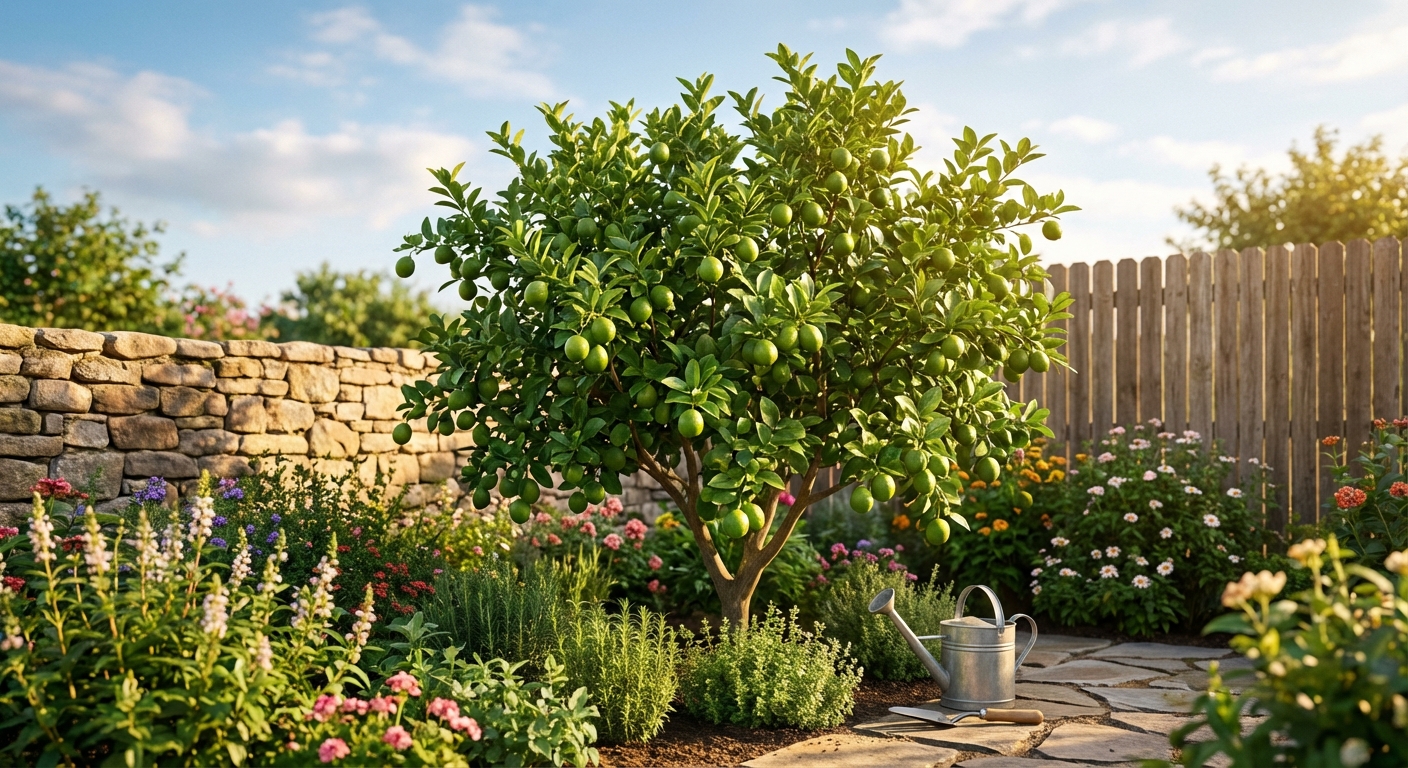
Persian lime trees are among the most attractive citrus varieties for home landscapes. They grow into medium to large trees with a graceful, spreading form that provides excellent shade while producing abundant fruit.
The trees are nearly thornless, making them safe around children and easy to maintain. This is a huge advantage over many citrus varieties that sport vicious thorns capable of causing serious injury.
The leaves are dark green, glossy, and aromatic when crushed. They're larger than those of Key lime trees, giving the Persian lime a more substantial, tropical appearance in the landscape.
White blossoms appear in spring and summer, filling the air with the classic citrus fragrance that makes these trees as much about sensory pleasure as fruit production. The flowers are self-fertile but produce no viable pollen due to the triploid genetics.
| Characteristic | Persian Lime | Key Lime |
|---|---|---|
| Tree Size | Medium to Large (15-20 feet) | Small to Medium (6-13 feet) |
| Thorns | Nearly Thornless | Very Thorny |
| Cold Tolerance | Hardy to 28-30°F | Tender, damaged at 32°F |
| Fruit Size | 2-2.5 inches diameter | 1-1.5 inches diameter |
| Seeds | Completely Seedless | 6-8 seeds per fruit |
| Harvest Season | October-December | Year-round in warm climates |
What Do Persian Limes Taste Like and How Are They Used?
Persian limes offer a different flavor profile than their smaller Key lime cousins. The taste is bright and acidic, but slightly less intense than Key limes. This makes them perfect for applications where you want citrus flavor without overwhelming other ingredients.
The flesh is pale greenish-yellow, incredibly juicy, and finely textured. One Persian lime typically yields 2-3 tablespoons of juice, compared to just 1-2 teaspoons from a Key lime. This efficiency explains why professional kitchens depend on them.
The skin is thin and smooth when the fruit is harvested at commercial ripeness (while still green). As fruits fully mature on the tree, the skin turns light yellow and develops the full complexity of flavor that makes tree-ripened limes superior to store-bought options.
In the kitchen, Persian limes excel in:
- Cocktails and beverages (margaritas, mojitos, gin and tonics)
- Marinades for meats and seafood
- Salad dressings and vinaigrettes
- Salsas and guacamole
- Asian stir-fries and curries
- Desserts like key lime pie (despite the name, most are made with Persian limes)
- Preserves and pickles
The zest is equally valuable, providing intense lime flavor without the acidity of the juice. The essential oils in the skin add complexity to both sweet and savory dishes.

How Do You Successfully Grow Persian Lime Trees?
Persian lime trees are more forgiving than many citrus varieties, but they still need proper care to thrive and produce abundant fruit. The key is understanding what these trees need to stay healthy year after year.
At US Citrus Nursery, we've learned that successful citrus growing comes down to what we call the Three Plant Pillars. This isn't common gardening wisdom. It's our proprietary framework based on growing over 250,000 citrus trees in South Texas.
The Three Plant Pillars are:
- Mineral-Based Soil - Permanent soil that never decomposes and provides constant oxygen to roots
- Live Microbials - Full-spectrum bacteria and fungi that protect roots and unlock nutrients
- Organic Fertilizer & Biostimulants - Complete nutrition without synthetic salts that kill beneficial microbes
When all three pillars are in place, Persian lime trees become nearly bulletproof. Miss any one, and you'll deal with root rot, yellowing leaves, weak fruiting, and pest issues.
What Climate Do Persian Limes Need?
Persian limes are significantly more cold-hardy than Key limes, tolerating temperatures down to 28-30°F without serious damage. This makes them suitable for USDA zones 9-11, and zone 8 with protection.
They thrive in areas where lemons grow successfully. If you can grow Meyer lemons in your climate, you can grow Persian limes. The trees actually perform better with some winter chill, which helps trigger spring blooming.
In containers, Persian limes can be grown in any climate. Move them indoors when temperatures drop below 35°F, and they'll continue growing and even blooming throughout winter.
What Type of Soil Do Persian Lime Trees Need?
Here's where most people get it wrong. That potting mix from the garden center isn't soil. It's pine bark sawdust that suffocates roots as it decomposes. Within six months, it's consuming the oxygen your Persian lime roots desperately need to survive.
Persian limes need mineral-based soil that never decomposes. Dr. Mani's Magic Super Soil provides exactly this: permanent, well-draining soil that keeps roots healthy for the life of the tree.
Super Soil contains one-third sand or sandy loam, one-third perlite or rice hulls, and one-third coco coir or peat moss, plus biochar, volcanic ash, sulfur for pH control, and live microbes. It's pre-adjusted to pH 6.0, the optimal level for citrus nutrient uptake.
| Soil Factor | Persian Lime Requirements | Why It Matters |
|---|---|---|
| Drainage | Excellent (water drains within 1-2 hours) | Prevents root rot and fungal diseases |
| pH Level | 6.0-6.5 (slightly acidic) | Optimal nutrient availability |
| Organic Matter | 10-15% stable organic matter | Nutrient retention and microbial activity |
| Aeration | 30-40% air space when moist | Root respiration and healthy growth |
| Water Retention | Moderate (holds moisture but drains excess) | Consistent hydration without waterlogging |
How Do You Water Persian Lime Trees?
Watering Persian limes correctly depends on your soil type and growing conditions. In mineral-based soil like Super Soil, overwatering is nearly impossible because excess water drains immediately.
The key is watering when the top 2 inches of soil feel dry to the touch. Always use the drench method: water slowly until water runs from the drainage holes at the bottom of the container.
Here's our watering schedule based on 20 years of experience:
- Below 60°F or indoors: Once per week
- 60-90°F, humid conditions: Twice weekly
- 60-90°F, dry conditions: Three times per week
- Above 90°F, humid conditions: Every other day
- Above 90°F, dry conditions: Daily
Adjust frequency based on wind, direct sun exposure, pot size, canopy size, and time of year. Recently repotted trees need more frequent watering for the first week as roots establish.
How Do You Fertilize Persian Lime Trees?
Persian limes need complete nutrition, not just the NPK numbers on synthetic fertilizer bags. Those blue synthetic fertilizers kill the beneficial microbes in your soil and burn roots with salt damage.
Dr. Mani's Magic Crab, Kelp & Amino Acids (7-4-4) provides all 12 essential nutrients that Persian limes need: nitrogen, phosphorus, potassium, calcium, magnesium, sulfur, iron, zinc, manganese, copper, boron, and molybdenum.
Apply 1 ounce per inch of trunk diameter monthly during active growth (skip when temperatures are below 40°F). This organic formula works with soil biology instead of against it, creating the conditions for long-term tree health.
Why Do Home Growers Love Persian Lime Trees?
Persian lime trees offer something special for home citrus growers: professional results without professional complexity. These trees forgive mistakes while rewarding good care with abundant, high-quality fruit.
The nearly thornless nature makes them safe around children and pets. You can harvest fruit, prune branches, and maintain the tree without the protective gear required for thorny varieties like Key limes.
The seedless fruit eliminates the tedious task of removing seeds from juice, zest, or recipes. One Persian lime does the work of three or four Key limes, making cooking and cocktail preparation much more efficient.
The extended harvest season means you're not overwhelmed with fruit all at once. Persian limes ripen gradually from October through December, providing a steady supply of fresh fruit throughout the fall and early winter.
Container growing makes Persian limes accessible to gardeners in any climate. The trees adapt well to large pots and can be moved indoors during cold weather, extending the growing range far beyond traditional citrus regions.
What Are Some Fascinating Persian Lime Facts?
Persian limes have some quirky characteristics that make them unique among citrus varieties. Understanding these oddities helps explain why this variety became so commercially successful.
The triploid genetics that make Persian limes seedless also make them incredibly vigorous growers. While most citrus varieties put energy into seed production, Persian limes channel all that energy into vegetative growth and fruit development.
All Persian lime trees carry a condition called "wood pocket," which sounds alarming but rarely affects home growers. This condition can cause wood deterioration in very old commercial orchards, but it doesn't impact fruit quality or home garden performance.
Despite being called "Persian" limes, they have no connection to Persia (modern-day Iran). The name likely came from early importers who may have received the fruit through Persian trade routes, even though the variety originated in the Western Hemisphere.
The flowers produce no viable pollen, making Persian limes completely dependent on vegetative propagation (grafting). Every Persian lime tree in the world is essentially a clone of the original seedling discovered in California over 125 years ago.
Persian limes will naturally drop from the tree when fully ripe, usually turning light yellow. This self-harvesting trait was valuable for commercial growers who could time harvest operations around the natural drop cycle.
The variety has spawned at least one interesting mutation: the Idemor lime, discovered in Florida in 1934. This smaller, rounder version never achieved commercial success but demonstrates the genetic instability that can occur in triploid citrus varieties.
Why Persian Lime Trees Deserve a Place in Your Backyard
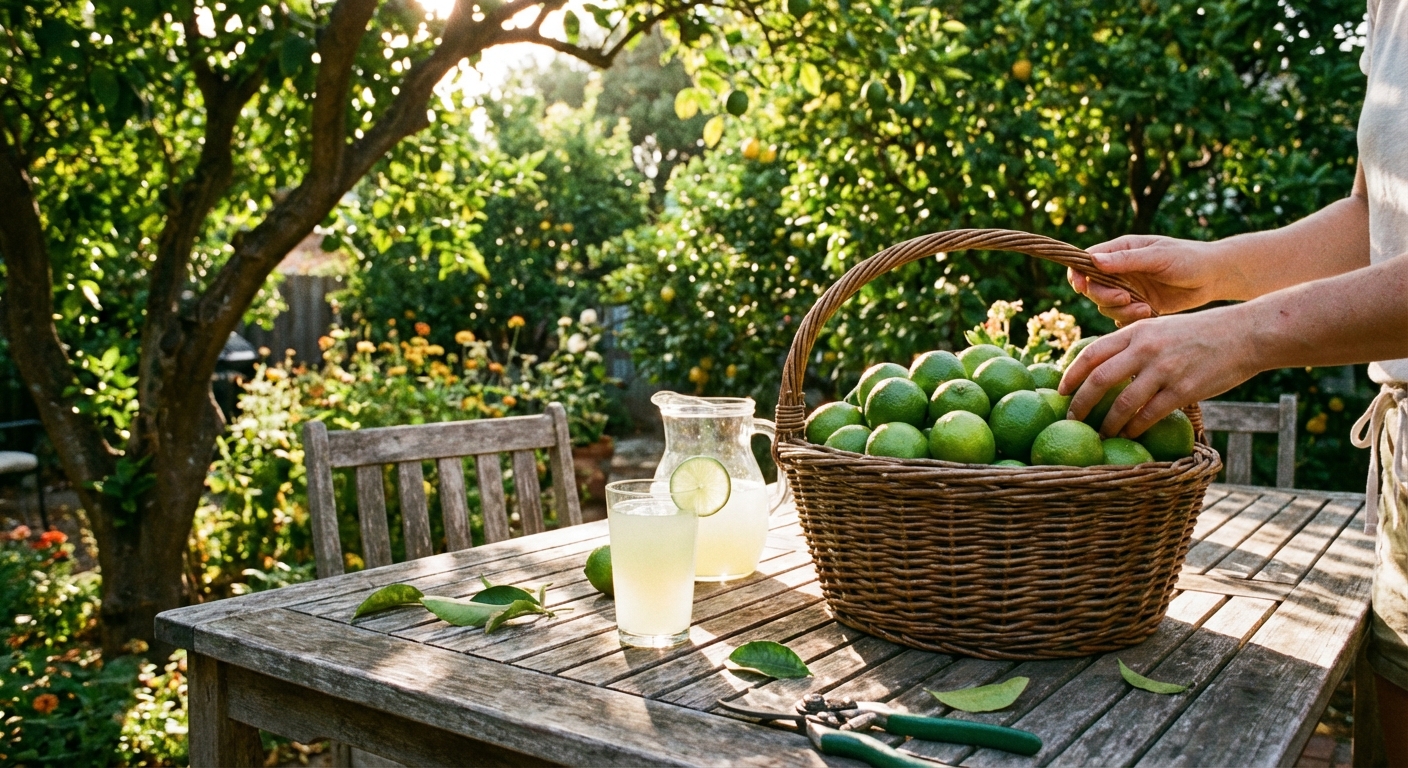
If you're considering adding citrus to your home garden, Persian lime trees offer an ideal combination of beauty, productivity, and practicality. These trees give you restaurant-quality limes while serving as attractive landscape specimens.
The nearly thornless branches make them safe and easy to maintain. The vigorous growth habit means you'll have fruit production much sooner than with slower-growing citrus varieties. The extended harvest season provides fresh limes when you need them, not all at once.
Most importantly, Persian limes are forgiving. They tolerate beginner mistakes while responding beautifully to proper care. With US Citrus Nursery's Three Plant Pillars system, you can give your Persian lime tree the foundation it needs for decades of healthy growth and abundant fruiting.
Ready to experience the difference of home-grown Persian limes? Our Persian Lime trees are grown in Dr. Mani's Magic Super Soil and arrive ready to thrive in your garden or container. Each tree represents over 20 years of citrus expertise and comes with everything you need to establish the Three Plant Pillars for long-term success.
Want to explore more citrus varieties? Browse our complete citrus collection to discover which varieties will transform your home growing experience.
Frequently Asked Questions
1. What is a Persian lime tree?
A Persian lime tree is a vigorous, nearly thornless citrus tree that produces large, juicy, seedless limes. Also known as the Tahiti lime or Bearss lime, it is valued for its commercial-quality fruit, cold tolerance, and suitability for home gardens and containers.
2. Why are Persian limes seedless?
Persian limes are seedless because they are triploid citrus trees, meaning they have three sets of chromosomes instead of the usual two. This genetic characteristic makes the trees sterile and prevents normal seed development, while allowing them to produce vigorous growth and abundant fruit.
3. Are Persian limes and Bearss limes the same?
Yes. Persian lime, Tahiti lime, and Bearss lime generally refer to the same citrus cultivar. The name Bearss comes from J.T. Bearss, who discovered the original seedling in California around 1895, while Tahiti and Persian became widely used commercial names.
4. Where did the Persian lime originate?
Despite its name, the Persian lime did not originate in Persia (modern-day Iran). The cultivar originated in California around 1895 from a seedling reportedly grown from Tahitian lime seeds. The variety was later propagated commercially because of its large, seedless fruit and vigorous growth.
5. How cold hardy are Persian lime trees?
Persian lime trees are more cold-tolerant than Key lime trees and can generally tolerate temperatures around 28–30°F for short periods. They perform best in USDA Zones 9–11. In colder climates, growing a Persian lime in a container allows you to move the tree indoors or into protected areas during freezing weather.
6. How often should you water a Persian lime tree?
Water a Persian lime tree when the top 2 inches of soil feel dry. Water deeply using the drench method until excess water flows from the drainage holes. In hot, dry conditions, the tree may need watering daily, while cooler or indoor conditions may require watering about once a week.
7. What soil is best for Persian lime trees?
Persian lime trees need well-draining, slightly acidic soil with excellent root aeration. A mineral-based growing medium containing materials such as sand, perlite or rice hulls, and coco coir can provide drainage while maintaining adequate moisture. A soil pH around 6.0–6.5 is generally suitable for citrus.
8. When do Persian limes ripen?
Persian limes typically reach peak maturity from October through December, although trees grown in warm climates can produce fruit outside this window. Mature limes may gradually turn from green to yellow and can naturally drop from the tree when fully ripe.
9. Can Persian lime trees be grown in containers?
Yes. Persian lime trees are excellent container citrus trees because they adapt well to large pots and can be moved when temperatures become too cold. Choose a container with adequate drainage, provide plenty of direct sunlight, and use a well-draining growing medium to support healthy roots.
10. What are Persian limes commonly used for?
Persian limes are widely used for margaritas, mojitos, marinades, salad dressings, guacamole, salsas, seafood, curries, desserts, and lime juice. Their large, juicy, seedless fruit makes them particularly convenient for cooking, baking, cocktails, and other recipes requiring fresh lime juice.
About the Author
Ron Skaria, MD
Ron Skaria is the son of Dr. Mani. He trained as a medical doctor at Baylor College of Medicine, did his residency at UT Health Science Center - San Antonio and fellowship training at Texas Tech University. He now works full time on the family farm at US Citrus and US Citrus Nursery in Hargill, Texas, building Dr. Mani's Magic alongside his dad. He wrote the Brown Thumb Field Guide to put his father's 48 years of plant science into plain words any gardener can use. His belief is simple. You never had a brown thumb. You just never had the right help.


