


N-33 Texas Navel Tree: Rare Donna Mutation with Unmatched Sweet
Deep in the heart of Texas, in the small town of Donna, something magical happened in the 1960s. A single navel orange tree began producing fruit so extraordinarily sweet and perfect that it would change the citrus world forever. This wasn't just another orange tree. This was the birth of the N-33 Texas Navel, a rare mutation that produces some of the sweetest, most flavorful navel oranges you'll ever taste.
What makes the N-33 so special? It's not just the incredible sweetness or the perfect balance of sugar and acid. It's the story of American citrus innovation, the dedication of Texas growers, and the discovery of a genetic treasure that almost disappeared into obscurity. Today, this remarkable tree represents one of the finest examples of what happens when nature's accidents create something truly extraordinary.
Key Takeaways
- N-33 Texas Navel originated as a rare mutation in Donna, Texas in the 1960s
- Produces exceptionally sweet fruit with perfect sugar-to-acid balance
- Ripens earlier than most navel varieties, typically November through January
- Thrives in USDA zones 9-11 and adapts well to container growing
- Features the classic navel formation with easy-to-peel, seedless segments
- Requires mineral-based soil, live microbes, and organic fertilizer for optimal performance
- Limited availability makes it a prized addition to any citrus collection
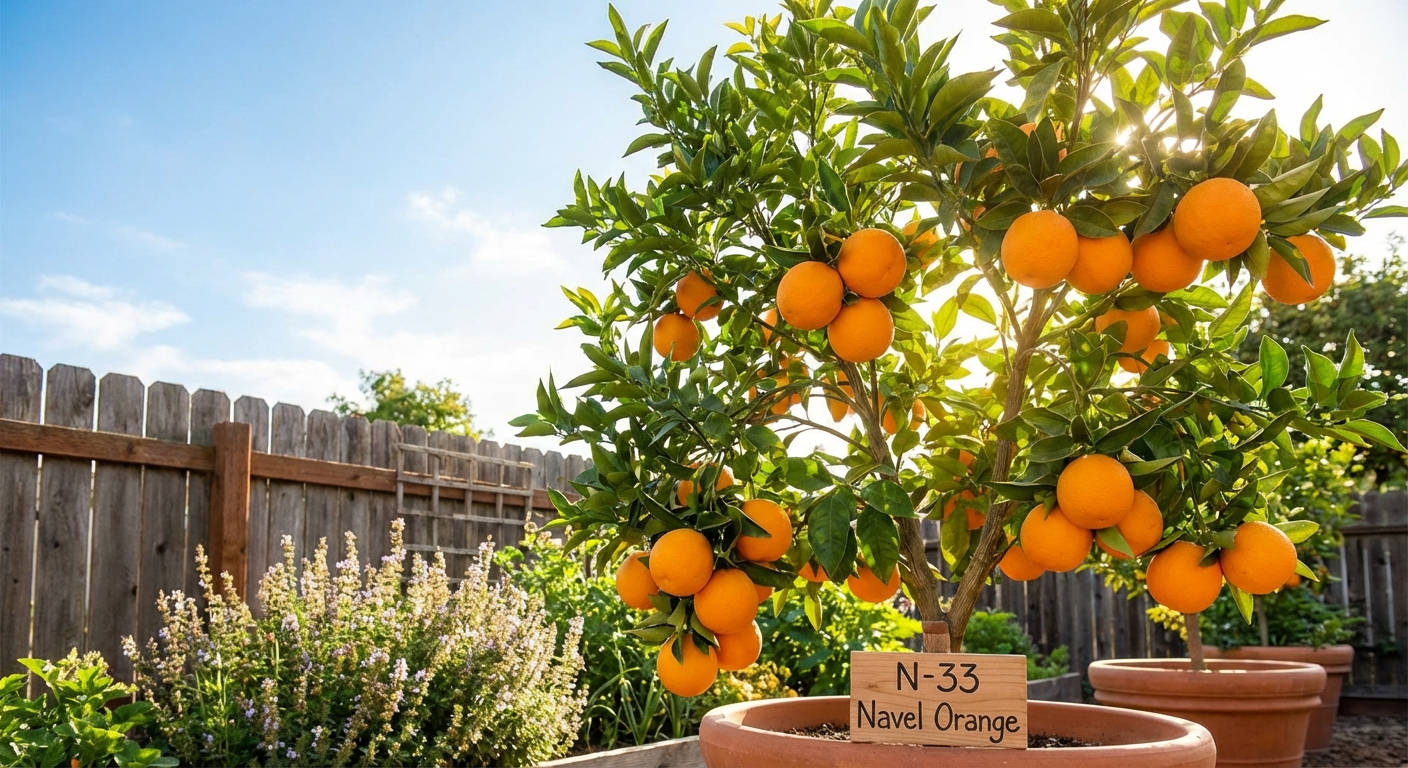
What Makes the N-33 Texas Navel Orange So Special?
The N-33 Texas Navel stands apart from other citrus varieties because of its remarkable sweetness and unique Texas heritage. While most navel oranges are good, the N-33 is exceptional. The fruit reaches sugar levels that rival the sweetest dessert oranges while maintaining the classic navel orange characteristics that make them perfect for fresh eating.

Organic Fertilizer | Crab, Kelp & Amino Acids (7‑4‑4) | Long-Lasting, Burn-Free Boost | Slow-Release Power for Steady Plant Growth
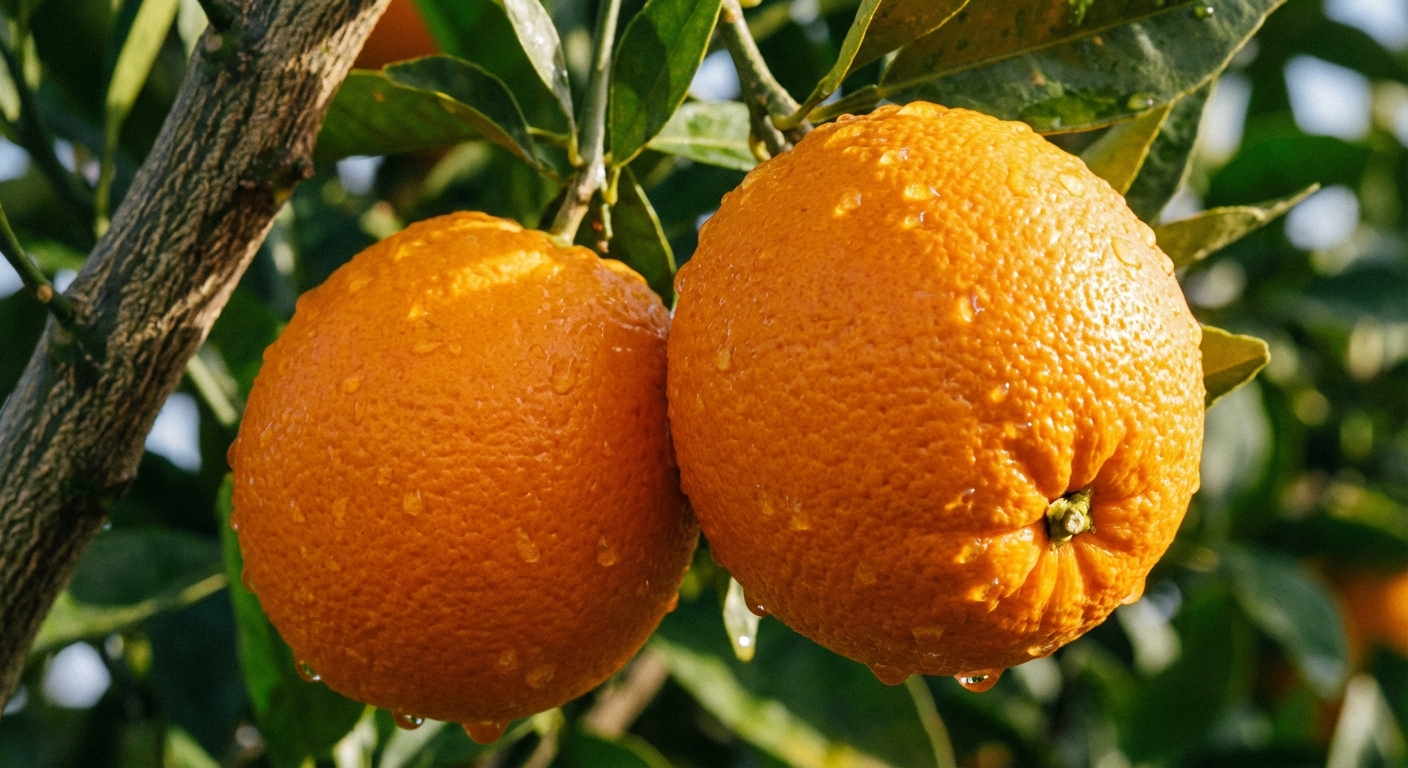
This variety produces medium to large fruit with the distinctive navel formation that gives these oranges their name. The thick, easy-to-peel skin protects sweet, juicy segments that separate effortlessly. Each bite delivers a burst of sunshine sweetness with just enough acidity to create perfect balance.
What truly sets the N-33 apart is its early ripening schedule. While many navel oranges don't reach peak sweetness until late winter, the N-33 delivers its incredible flavor from November through January. This means you get to enjoy premium fresh oranges right when you need them most, during the holiday season and cold winter months.
Ancient Origins and the Global Journey of Navel Oranges
The story of navel oranges begins thousands of years ago in the mountains of northern India and southern China. These early citrus fruits were nothing like the perfect N-33 we know today. They were small, seedy, and often bitter. But they carried within their genetic code the potential for something extraordinary.
The distinctive navel formation that defines these oranges is actually a fascinating genetic quirk. Inside each navel orange, a second, smaller fruit develops at the blossom end. This creates the belly button appearance that gives navel oranges their name. This mutation makes the fruit seedless, which was initially seen as a problem but later became one of their most valuable traits.
Navel oranges spread along ancient trade routes, carried by merchants and travelers who recognized their unique qualities. By the medieval period, these special oranges had reached the Mediterranean, where they thrived in the warm, sunny climate. Each region that grew them developed slightly different characteristics, but the basic navel formation remained constant.
The UCR Citrus Variety Collection documents how these early navel varieties evolved over centuries of cultivation. Growers in different regions selected the best trees, slowly improving sweetness, size, and growing characteristics through careful observation and patience.
How Did Navel Oranges Arrive in the Americas?
The arrival of navel oranges in the Americas represents one of the most successful agricultural introductions in history. In 1870, a missionary in Brazil discovered some exceptional navel orange trees growing near Bahia. These trees produced fruit that was sweeter and more flavorful than anything previously known in the Americas.
The U.S. Department of Agriculture recognized the potential of these Brazilian navel oranges and imported several trees to Washington, D.C. in 1871. Two of these trees were then sent to California, where they were planted in Riverside. These two trees became the parents of California's entire navel orange industry.
The success in California inspired growers in other warm regions to try navel oranges. Texas growers began experimenting with navel varieties in the early 1900s, planting them in the Rio Grande Valley where the warm climate and rich soil proved ideal for citrus cultivation.
By the 1950s and 1960s, Texas had developed a thriving citrus industry. Growers were constantly looking for better varieties, ones that could handle Texas heat while producing exceptional fruit. This search for the perfect Texas orange set the stage for the discovery of the N-33 mutation.
The Birth of the N-33: A Texas Miracle in Donna
The N-33 Texas Navel's origin story reads like something from a citrus fairy tale. In the 1960s, in the small town of Donna in the Rio Grande Valley of Texas, a single branch on a navel orange tree began producing fruit that was dramatically different from the rest of the tree. This branch produced oranges that were sweeter, more flavorful, and perfectly adapted to the Texas growing climate.
Local growers recognized they had discovered something special. The fruit from this mutant branch was so superior that they began propagating from it exclusively. Through careful grafting and selection, they developed what would become known as the N-33 Texas Navel, named after its selection number in breeding programs.
What makes this mutation so remarkable is how perfectly it adapted to Texas conditions. While many citrus varieties struggle with Texas heat and humidity, the N-33 thrived. It developed characteristics that helped it succeed in the challenging Texas climate while producing fruit quality that exceeded even California navels.
The N-33 mutation represents the power of natural selection combined with human observation and care. It shows how citrus trees continue to evolve and improve, creating new varieties that are better adapted to specific growing conditions while delivering superior fruit quality.
Cultural Significance and Holiday Traditions
The N-33 Texas Navel has become deeply woven into Texas citrus culture and American holiday traditions. Its early ripening schedule makes it perfect for Christmas stockings, holiday gift boxes, and winter celebrations when fresh, sweet fruit provides a welcome taste of sunshine.
In Texas, the N-33 represents more than just a citrus variety. It symbolizes the state's agricultural innovation and the ability to create something uniquely Texan that rivals the best citrus from anywhere in the world. Local festivals celebrate the harvest season, with the N-33 taking center stage as a point of regional pride.
The tradition of giving citrus during the holidays takes on special meaning with N-33 oranges. Their exceptional sweetness and perfect timing make them ideal for sharing with family and friends during the winter months. Many Texas families have made N-33 oranges part of their holiday traditions, using them in recipes, decorations, and gift-giving.
Beyond holidays, the N-33 has found its place in Texas cuisine. Chefs prize the fruit for its consistent quality and exceptional flavor. The juice is perfect for fresh-squeezed orange juice, while the segments add brightness to salads, desserts, and savory dishes.
Botanical Characteristics: What Does the N-33 Tree Look Like?
The N-33 Texas Navel tree displays all the classic characteristics of premium citrus varieties while maintaining its own unique Texas personality. Understanding these botanical features helps you appreciate what makes this tree so special and how to care for it properly.
| Characteristic | N-33 Texas Navel Details |
|---|---|
| Mature Size | 12-20 feet tall, 10-15 feet wide (can be kept smaller in containers) |
| Growth Habit | Rounded, dense canopy with moderate vigor |
| Leaves | Dark green, glossy, oval-shaped with slight serration |
| Thorns | Few to moderate small thorns on young growth |
| Flowers | White, fragrant, 5-petaled, appear in clusters |
| Cold Tolerance | Hardy to about 25°F when mature |
The N-33 tree develops a beautiful, rounded canopy that provides excellent fruit production while remaining manageable for home growers. The branches are strong and well-structured, capable of supporting heavy fruit loads without breaking. This structural strength is one of the adaptations that makes the N-33 successful in Texas conditions.
The leaves of the N-33 are particularly beautiful, displaying the deep green color and glossy finish that indicates healthy citrus. They're slightly larger than many citrus varieties, which helps the tree capture more sunlight for photosynthesis and sugar production. This increased leaf surface area contributes to the exceptional sweetness of the fruit.
When the N-33 blooms, usually in early spring, the tree becomes covered in clusters of fragrant white flowers. These blooms not only produce the fruit but also fill the air with the classic citrus fragrance that makes growing citrus such a sensory pleasure. The flowers are self-fertile, so you only need one tree to get fruit production.
The Fruit: Unmatched Sweetness and Perfect Texture
The fruit of the N-33 Texas Navel represents the pinnacle of navel orange development. Each orange embodies the perfect balance of sweetness, acidity, and texture that makes citrus such a beloved fruit. When you bite into an N-33 orange, you're experiencing the result of decades of careful selection and Texas terroir.
The fruit typically measures 3 to 4 inches in diameter, making them perfect for fresh eating while substantial enough to provide plenty of juice. The skin develops a beautiful orange color with excellent thickness that protects the fruit while remaining easy to peel. The classic navel formation is clearly visible, creating the distinctive belly button appearance that identifies these as premium navel oranges.
Inside, the fruit reveals 10 to 12 segments that separate easily without the mess often associated with other orange varieties. The flesh is deep orange, incredibly juicy, and completely seedless. The texture strikes the perfect balance between firm and tender, with each segment bursting with sweet juice when bitten.
| Fruit Quality | N-33 Texas Navel Rating |
|---|---|
| Sweetness Level | Exceptional (12-14 Brix) |
| Acidity Balance | Perfect (0.8-1.0% citric acid) |
| Juice Content | High (45-55% by weight) |
| Seediness | Completely seedless |
| Peel Thickness | Medium, easy to remove |
| Storage Life | 2-3 weeks refrigerated |
The flavor profile of N-33 oranges is what truly sets them apart. The sweetness is intense but not cloying, balanced perfectly with just enough acidity to create complexity and prevent the fruit from being flat or one-dimensional. This balance makes N-33 oranges perfect for fresh eating, juicing, or cooking applications where you want bright citrus flavor without excessive tartness.
The aroma of fresh N-33 oranges is intoxicating. When you peel the fruit, oils from the skin release that classic citrus fragrance that immediately tells you you're dealing with premium fruit. This aromatic quality makes N-33 oranges perfect for zesting in recipes or simply enjoying the sensory experience of fresh citrus.
Growing Guide: How to Grow N-33 Texas Navel Trees Successfully
Growing N-33 Texas Navel trees successfully requires understanding their specific needs and providing the right foundation for long-term health and productivity. These trees are remarkably adaptable, but they perform best when given proper care based on proven principles.
The key to success lies in US Citrus Nursery's Three Plant Pillars system. This approach recognizes that healthy roots create healthy plants, and healthy plants produce exceptional fruit. When all three pillars are in place, your N-33 tree will thrive for decades.
Climate Requirements and Hardiness Zones
N-33 Texas Navel trees perform best in USDA hardiness zones 9 through 11, where they can remain outdoors year-round. They're more cold-tolerant than many citrus varieties, handling brief periods down to 25°F when mature. However, young trees need protection from freezing temperatures until they develop strong root systems and mature wood.
In borderline climates (zone 8), N-33 trees can succeed with proper placement and cold protection. Choose the warmest, most protected location in your yard, such as against a south-facing wall or in a courtyard that provides wind protection. Be prepared to cover the tree or move container plants indoors during extreme cold snaps.
These trees love heat and perform exceptionally well in hot summer climates. The Texas heritage shows in their ability to maintain fruit quality even during intense summer heat. They actually need hot summers to develop the sugar levels that make N-33 oranges so exceptionally sweet.
The Three Plant Pillars for N-33 Success
US Citrus Nursery's Three Plant Pillars provide the foundation for growing healthy, productive N-33 trees. This system addresses the three critical needs that every plant must have to thrive: proper soil structure, beneficial microbes, and complete nutrition.
Pillar 1: Mineral-Based Soil
Your N-33 tree's roots need permanent, well-draining soil that never decomposes or suffocates the roots. Dr. Mani's Magic Super Soil provides exactly this foundation. Unlike potting mix (which is just pine bark sawdust that decomposes and kills roots), Super Soil uses mineral-based ingredients that provide permanent aeration and drainage.
Super Soil contains one-third sand or sandy loam, one-third perlite or rice hulls, and one-third coco coir or peat moss. Plus essential amendments including 5% biochar for nutrient retention, sulfur for pH control, volcanic ash for minerals, and beneficial microbes. This formula never needs replacing and provides the permanent root zone your N-33 needs to thrive.
Pillar 2: Live Microbials
In nature, plant roots are never alone. They're surrounded by billions of beneficial bacteria and fungi that protect roots, unlock nutrients, and create the living soil ecosystem that supports healthy plant growth. Plant Super Boost provides these essential microbes in a stabilized, easy-to-apply form.
Apply Plant Super Boost monthly at 2 ounces per gallon of water. This replenishes the microbial population that naturally declines in containers over time. These live microbes work symbiotically with your N-33's roots, extending the root system's reach and improving nutrient uptake efficiency.
Pillar 3: Complete Organic Fertilizer
Crab, Kelp & Amino Acids provides all 12 essential plant nutrients in a slow-release, organic form that works with your soil microbes rather than against them. This 7-4-4 formula includes nitrogen for leaf growth, phosphorus for root development, potassium for fruit quality, plus calcium, magnesium, sulfur, and essential trace elements.
Apply monthly during the growing season at 1 ounce per inch of trunk diameter. This provides steady, consistent nutrition without the salt buildup and root burn associated with synthetic fertilizers.
Container Growing Tips
N-33 Texas Navel trees adapt beautifully to container culture, making them perfect for patios, balconies, or areas where you need to move them for cold protection. Container growing also allows you to control soil conditions precisely and move the tree to optimize sun exposure.
| Container Size | Tree Age/Size | Expected Fruit Production |
|---|---|---|
| 15-20 gallon | 2-4 years, 3-5 feet tall | 10-25 oranges per year |
| 25-30 gallon | 4-6 years, 5-7 feet tall | 25-50 oranges per year |
| 40+ gallon | 6+ years, 7-10 feet tall | 50-100+ oranges per year |
Choose containers with multiple drainage holes to prevent waterlogging. The mineral-based Super Soil drains so well that overwatering becomes nearly impossible, but proper drainage is still essential for long-term root health.
Place containers where they receive 6-8 hours of direct sunlight daily. N-33 trees can tolerate some afternoon shade in extremely hot climates, but morning sun is essential for proper fruit development and sugar accumulation.
Watering Schedule and Techniques
Proper watering technique matters more than frequency when growing N-33 trees in mineral-based soil. Always use the drench method: water thoroughly until water runs from the drainage holes, then don't water again until the top 2 inches of soil feel dry to the touch.
Use this proven watering schedule based on temperature and humidity conditions:
| Temperature | Humidity Conditions | Watering Frequency |
|---|---|---|
| Below 60°F | Any humidity | Once per week |
| 60-90°F | Humid conditions | Twice weekly |
| 60-90°F | Dry conditions | Three times weekly |
| Above 90°F | Humid conditions | Every other day |
| Above 90°F | Dry conditions | Daily |
Adjust frequency based on wind exposure, container size, and tree canopy size. Recently transplanted trees may need more frequent watering for the first week as they establish in their new soil environment.
Why Home Growers Love the N-33 Texas Navel Tree
Home growers across the country have discovered why the N-33 Texas Navel deserves a special place in their hearts and their gardens. This isn't just another citrus tree. It's a connection to Texas agricultural heritage, a source of exceptional fruit, and a reliable performer that rewards proper care with decades of production.
The most common comment from N-33 growers is amazement at the fruit quality. Many people have never tasted truly tree-ripened navel oranges, and the N-33 provides an experience that store-bought fruit simply cannot match. The sweetness is intense, the texture perfect, and the flavor complex in ways that make you understand why people become passionate about growing their own citrus.
N-33 trees also appeal to growers because of their manageable size and reliable production. Unlike some citrus varieties that can become enormous or produce erratically, the N-33 maintains a reasonable size while producing consistent crops year after year. This makes it perfect for suburban lots, container growing, and situations where space is limited but fruit quality cannot be compromised.
The early ripening schedule is another major advantage for home growers. Having fresh, sweet oranges available from November through January means you can enjoy premium citrus during the holidays and cold winter months when store-bought fruit is often at its worst quality and highest prices.
Many growers also appreciate the N-33's Texas heritage and the story behind the variety. Growing a piece of agricultural history adds meaning to the gardening experience and connects you to the tradition of American citrus innovation. When you share N-33 oranges with friends and family, you're sharing not just exceptional fruit but also the story of how this remarkable variety came to be.
Historical Oddities and Rare Facts About N-33 Oranges
The history of the N-33 Texas Navel contains fascinating details that most people never learn. These stories add depth to your appreciation of this remarkable variety and provide conversation starters when sharing your homegrown fruit.
Did you know that the original N-33 mutation was almost lost to history? The grove where it was discovered was scheduled for development in the 1970s. Only the quick action of a local citrus researcher who recognized the variety's potential saved budwood from the original tree. Without this intervention, the N-33 might have disappeared forever, taking its exceptional genetics with it.
The "N-33" designation comes from its position in a numbered selection program, but many growers don't realize that there were 47 other selections from the same program. The N-33 was the clear winner, showing superior fruit quality and consistent performance compared to all other selections. Some of the other numbered selections still exist in research collections, but none matched the N-33's exceptional characteristics.
Here's a surprising fact: N-33 oranges can actually become sweeter in storage than when first picked. Unlike many fruits that deteriorate after harvest, properly stored N-33 oranges continue to convert starches to sugars for several weeks after picking. This means that oranges stored in cool, humid conditions can become noticeably sweeter over time.
The N-33's adaptation to Texas heat is so complete that trees actually produce better fruit in hot summers than in mild ones. The heat stress triggers biochemical changes that concentrate sugars and intensify flavors. This is the opposite of most citrus varieties, which suffer quality loss in extreme heat.
Another interesting detail: the N-33 was one of the first citrus varieties to be propagated using modern micro-budding techniques. This precision grafting method, developed by Dr. Mani Skaria at Texas A&M, allows for more precise transfer of genetic material and results in trees that maintain the exact characteristics of the parent variety.
Comparing N-33 to Other Popular Navel Varieties
Understanding how the N-33 Texas Navel compares to other popular navel varieties helps you appreciate what makes it special and decide if it's the right choice for your growing situation.
| Variety | Ripening Season | Sweetness Level | Cold Tolerance | Heat Tolerance |
|---|---|---|---|---|
| N-33 Texas Navel | November-January | Exceptional | 25°F | Excellent |
| Washington Navel | December-February | Very Good | 22°F | Good |
| Cara Cara Navel | December-March | Very Good | 25°F | Good |
| Lane Late Navel | February-April | Good | 25°F | Fair |
The N-33's early ripening gives it a significant advantage for home growers who want fresh oranges during the holiday season. While Washington Navels are still developing their flavor in November, N-33 oranges are already at peak sweetness and ready to enjoy.
The heat tolerance of the N-33 makes it uniquely suited to hot summer climates where other navel varieties struggle. This Texas adaptation allows the tree to maintain fruit quality even during periods of extreme heat that would cause other varieties to drop fruit or produce poor-quality oranges.
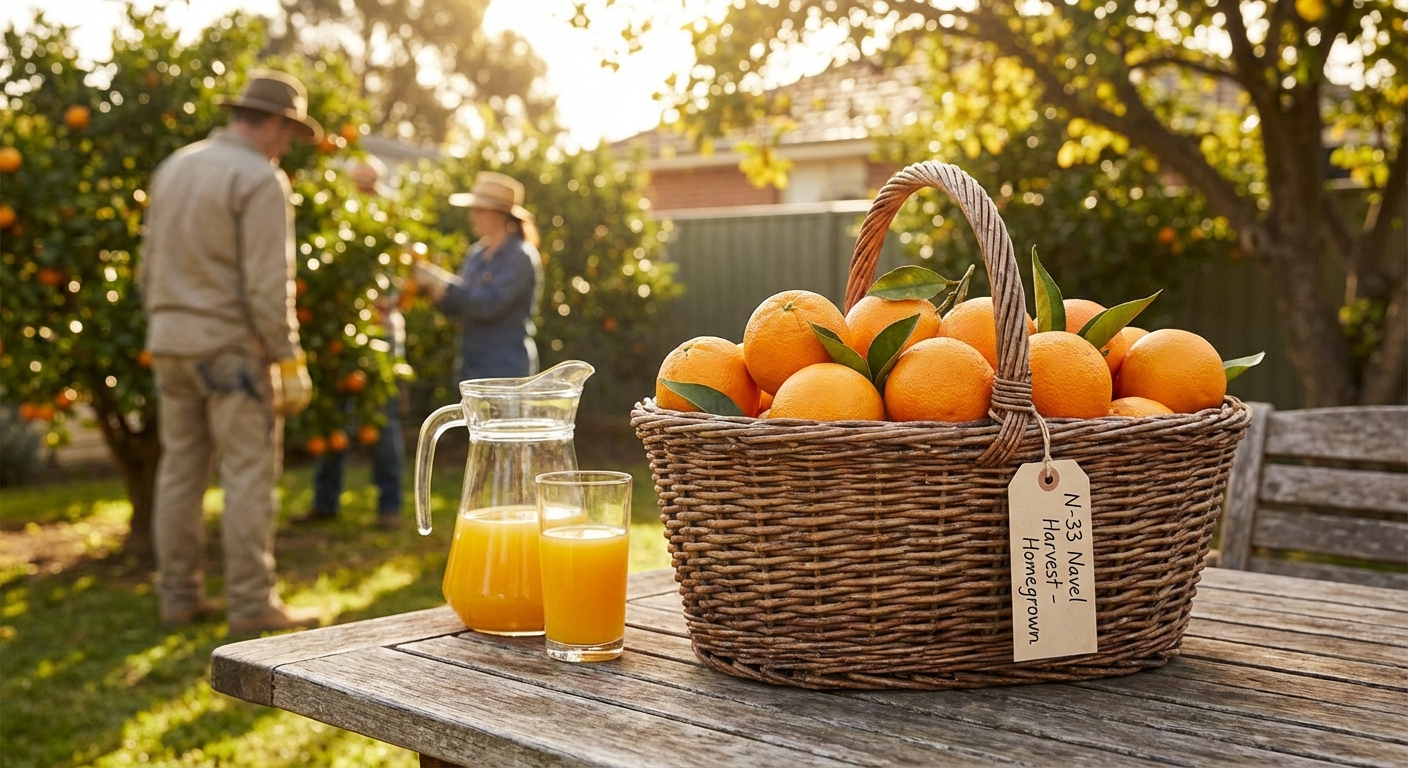
Why the N-33 Texas Navel Tree Deserves a Place in Your Backyard
After exploring the rich history, exceptional fruit quality, and proven growing characteristics of the N-33 Texas Navel, it becomes clear why this variety deserves serious consideration for your citrus collection. This isn't just another orange tree. It's an opportunity to grow something truly special, something that connects you to agricultural heritage while providing fruit quality that exceeds anything you can buy in stores.
The N-33 represents the best of American citrus breeding, combining natural mutation with careful selection to create a variety perfectly adapted to challenging growing conditions while delivering uncompromised fruit quality. When you grow an N-33, you're participating in the ongoing story of American agricultural innovation.
From a practical standpoint, the N-33 offers everything home growers want: manageable size, reliable production, exceptional fruit quality, and adaptation to container culture. The early ripening schedule provides fresh oranges when you need them most, and the superior sweetness makes every orange a special treat rather than just another piece of fruit.
The Three Plant Pillars system makes growing N-33 trees more successful and rewarding than ever before. When you provide mineral-based soil, live microbes, and complete organic nutrition, your N-33 tree will reward you with decades of exceptional fruit production and the satisfaction of growing something truly extraordinary.
Whether you're an experienced citrus grower looking to expand your collection or a beginner wanting to start with something special, the N-33 Texas Navel offers the perfect combination of historical significance, exceptional quality, and reliable performance.
Ready to add this remarkable Texas treasure to your growing collection? Browse our citrus trees to discover the N-33 Texas Navel and other premium varieties that will transform your backyard into a productive citrus paradise. Your future self will thank you for choosing quality, heritage, and the unmatched sweetness that only comes from growing your own exceptional fruit.
Frequently Asked Questions
1. What is an N-33 Texas Navel Orange?
The N-33 Texas Navel is a rare navel orange selection associated with Donna, Texas, that is prized for its exceptionally sweet fruit, balanced acidity, seedless segments, and early ripening season. It typically produces high-quality oranges from November through January and is well suited to warm climates such as South Texas.
2. Where did the N-33 Texas Navel Orange originate?
The N-33 Texas Navel originated from a rare mutation discovered on a navel orange tree in Donna, Texas, during the 1960s. Growers recognized the superior fruit quality and propagated the desirable branch through grafting, preserving its unique characteristics.
3. When does an N-33 Texas Navel Orange tree produce fruit?
An N-33 Texas Navel typically ripens from November through January, making it an early-season navel orange variety. Grafted trees can begin producing fruit within a few years under good growing conditions, with production increasing as the tree matures.
4. How sweet are N-33 Texas Navel oranges?
N-33 Texas Navel oranges are known for their exceptionally sweet flavor and balanced sugar-to-acid profile. The fruit is typically described as intensely sweet without being overly acidic, making it excellent for fresh eating, juicing, and desserts.
5. How cold hardy is the N-33 Texas Navel orange tree?
A mature N-33 Texas Navel tree can tolerate temperatures around 25°F for short periods, although cold damage can occur depending on the tree's age, duration of the freeze, and growing conditions. Young trees require additional protection during freezing weather.
6. Can you grow an N-33 Texas Navel orange tree in a container?
Yes, N-33 Texas Navel orange trees can be grown successfully in containers. Choose a container with multiple drainage holes, provide 6–8 hours of direct sunlight, and gradually increase container size as the tree grows. Container growing is particularly useful in colder climates because the tree can be moved indoors or into protected areas during freezes.
7. What soil is best for an N-33 Texas Navel orange tree?
N-33 Texas Navel trees perform best in well-draining soil with good root aeration. A mineral-based growing medium containing materials such as sand, perlite, rice hulls, or other coarse components can help prevent waterlogging and maintain oxygen around the roots. Avoid heavy, poorly draining soil that stays saturated for long periods.
8. How often should you water an N-33 Texas Navel orange tree?
Water an N-33 tree when the top 2 inches of soil feel dry, rather than following a rigid watering schedule. Water deeply until excess water drains from the container or planting area. Frequency increases during hot, dry weather and decreases during cooler conditions. Good drainage is essential to prevent root problems.
9. How much sunlight does an N-33 Texas Navel orange tree need?
An N-33 Texas Navel orange tree generally needs 6–8 hours of direct sunlight per day for strong growth, flowering, and fruit development. A location with morning and afternoon sun, protection from strong winds, and good air circulation is ideal.
10. Why is the N-33 Texas Navel orange tree a good choice for home gardeners?
The N-33 Texas Navel combines exceptional sweetness, seedless fruit, early ripening, Texas heritage, reliable production, and container adaptability. Its November–January harvest season makes it especially appealing for gardeners who want fresh, tree-ripened oranges during the holiday and winter season. With proper soil, watering, nutrition, sunlight, and cold protection, it can become a productive backyard citrus tree for many years.
About the Author
Ron Skaria, MD
Ron Skaria is the son of Dr. Mani. He trained as a medical doctor at Baylor College of Medicine, did his residency at UT Health Science Center - San Antonio and fellowship training at Texas Tech University. He now works full time on the family farm at US Citrus and US Citrus Nursery in Hargill, Texas, building Dr. Mani's Magic alongside his dad. He wrote the Brown Thumb Field Guide to put his father's 48 years of plant science into plain words any gardener can use. His belief is simple. You never had a brown thumb. You just never had the right help.


