


Shiranui (Dekopon) Mandarin Tree Guide: Premium Japanese Citrus
You're holding a citrus fruit that costs $6.60 per piece in Japan. Not per pound. Per single fruit. This isn't some marketing gimmick. This is the Shiranui mandarin, known commercially as Dekopon or "Sumo Citrus" in America.
What makes this mandarin so special that Japanese consumers pay premium prices for it? The answer lies in its incredible sweetness, massive size, and that distinctive "topknot" bump that makes it look like a sumo wrestler's hairdo.
After growing over 250,000 citrus trees at our South Texas nursery, we've learned that the Shiranui represents everything great about modern citrus breeding. It combines the best traits of its parent varieties into something truly extraordinary.

Organic Fertilizer | Crab, Kelp & Amino Acids (7‑4‑4) | Long-Lasting, Burn-Free Boost | Slow-Release Power for Steady Plant Growth
Key Takeaways
- Shiranui is a hybrid of Kiyomi tangor and Ponkan mandarin, created in Japan in the early 1990s
- Known for its distinctive "topknot" bump and incredible sweetness (often exceeding 13° Brix)
- Commercially marketed as "Sumo Citrus" in the US, with strict quality standards
- Requires 20-40 days post-harvest curing to reduce acidity and concentrate sugars
- Thrives in containers with proper mineral-based soil and consistent care
- Ripens December through February, perfect for winter fresh fruit
- Multiple regional names: Dekopon (Japan), Hallabong (Korea), Kiyopon (Hiroshima)
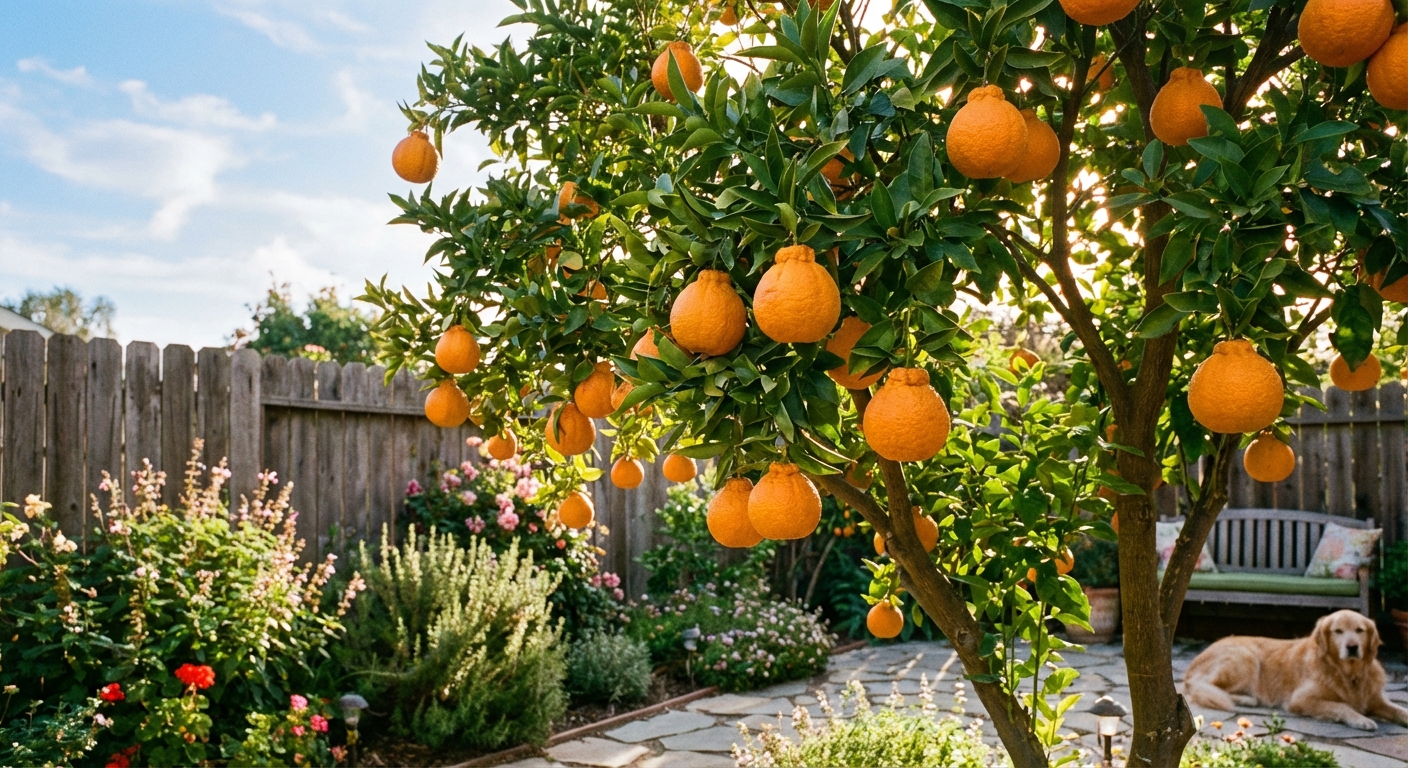
What Makes the Shiranui Mandarin So Special?
The Shiranui mandarin didn't become the world's most expensive citrus by accident. This fruit represents decades of careful breeding and cultivation techniques that push the boundaries of what citrus can achieve.
Most mandarins are sweet. But Shiranui mandarins are explosively sweet. We're talking about sugar levels that often exceed 13° Brix, with some exceptional fruits reaching 15° Brix or higher. To put that in perspective, most oranges clock in around 10-12° Brix.
But sweetness alone doesn't explain the premium price. The real magic happens in the balance. While most super-sweet fruits sacrifice acidity and become cloying, Shiranui maintains just enough tartness to create perfect harmony. This balance comes from the unique post-harvest curing process that Japanese growers have perfected.
Where Did the Shiranui Mandarin Come From?
The story begins in Japan's citrus research facilities during the early 1990s. Japanese breeders were on a mission to create the ultimate mandarin, combining size, sweetness, and eating quality into one superior fruit.
They achieved this by crossing two exceptional parent varieties. The first parent was Kiyomi, itself a hybrid between Satsuma mandarin and sweet orange. Kiyomi brought size and juice content to the mix. The second parent was Ponkan, a Chinese mandarin famous for its intense sweetness and distinctive aroma.
According to the UCR Citrus Variety Collection, this variety was imported from Japan to China around 1993, then made its way to California through the Citrus Clonal Protection Program in 2016 after extensive quarantine and testing.
The name "Dekopon" itself tells the story. It combines "deko," the Japanese word meaning "uneven" (referring to that characteristic bump), with "pon" from Ponkan, one of its parent varieties. It's a name that perfectly captures the fruit's most distinctive feature.
How Did Shiranui Spread Around the World?
From its origins in Japanese research stations, Shiranui quickly captured the attention of citrus growers worldwide. But spreading this variety wasn't as simple as shipping some seeds overseas.
Japan initially kept tight control over their premium citrus creation. The first international expansion happened when the variety was imported to China around 1993. Chinese growers began cultivating it in their research facilities, learning the specialized techniques needed to produce quality fruit.
Korea embraced Shiranui with enthusiasm, particularly on Jeju Island. Korean growers renamed it "Hallabong" after Hallasan, the mountain that dominates Jeju Island. The volcanic soils and mild climate of Jeju proved perfect for growing exceptional Shiranui fruit.
Brazil represents one of the most successful international adaptations. Japanese immigrant farmers in São Paulo state figured out how to grow Shiranui in tropical highlands. They adapted the cultivation techniques to work in Southern Hemisphere seasons, harvesting from May through September instead of winter months.
The United States got access through multiple pathways. Sunkist Japan brought in the first accession for Stark Brothers in 1998. Later, the variety became available through public breeding programs, though commercial production remains limited and highly controlled.
Why Is Shiranui Called "Sumo Citrus" in America?
When Agricultural Capital (which acquired the rights from Suntreat) wanted to market Shiranui in the United States, they faced a challenge. How do you explain a Japanese name like "Dekopon" to American consumers?
Their solution was brilliant: "Sumo Citrus." The name captures everything that makes this fruit special. Like sumo wrestlers, these mandarins are large, powerful, and distinctively shaped with that characteristic "topknot" bump.
The Sumo Citrus brand comes with strict quality standards. Every fruit must meet specific criteria for size, sweetness, and appearance. This quality control explains why Sumo Citrus commands premium prices in American supermarkets, often $3-4 per fruit.
But here's what most people don't realize: you can grow the same variety at home. When you grow your own Shiranui tree, you're not just getting delicious fruit. You're participating in a global citrus tradition that spans from Japanese greenhouses to Brazilian highlands to your own backyard.
What Cultural Traditions Surround Shiranui Mandarins?
In Japan, Dekopon has become more than just fruit. It's a symbol of premium quality and careful craftsmanship. Japanese consumers often give Dekopon as gifts during New Year celebrations, when the fruit is at its peak ripeness.
The post-harvest curing process has become an art form in itself. Japanese growers store harvested fruit for 20-40 days in controlled conditions, allowing citric acid levels to drop while sugar concentrations increase. This patience transforms good fruit into extraordinary fruit.
Korean Hallabong has become deeply connected to Jeju Island's identity. The volcanic island's unique terroir produces Hallabong with distinctive flavor characteristics that Korean consumers can identify in blind tastings. Jeju Hallabong has protected designation status, similar to Champagne or Parmigiano-Reggiano.
Brazilian growers have created their own traditions around the fruit they call "Dekopon brasileiro." Street vendors in São Paulo know exactly when the season peaks, and local families plan gatherings around the harvest timing. The lower prices in Brazil (around 50 cents per fruit) make it accessible for regular consumption rather than special occasions.
Even Hi-Chew, the famous Japanese candy company, created a Dekopon flavor that became wildly popular. This candy introduction helped spread awareness of the fruit beyond traditional citrus consumers.
What Are the Botanical Characteristics of Shiranui Trees?
Shiranui trees display the vigor and growth habits you'd expect from their hybrid parentage. These trees typically reach 8-12 feet at maturity when grown in containers, making them perfect for patio cultivation.
The leaves are distinctive, larger than typical mandarin varieties, with the glossy dark green color inherited from the Kiyomi parent. New growth often shows a bronze tint before maturing to full green. The leaves have a subtle citrus fragrance when brushed or crushed.
Most Shiranui trees are nearly thornless, a trait that makes them excellent for home growing. The few thorns that do appear are small and not aggressive, unlike some citrus varieties that can be quite defensive.
The trees produce abundant white blossoms in spring, typically March through May depending on your climate. These flowers are larger than standard mandarin blossoms and incredibly fragrant. A single tree in bloom can perfume an entire patio area.
Branch structure tends to be open and spreading rather than upright. This growth habit allows good light penetration to interior branches, promoting fruit development throughout the canopy rather than just on outer branches.
Root systems are vigorous when given proper growing conditions. In mineral-based soil with good drainage, Shiranui trees develop extensive feeder root networks that support heavy fruit production.
| Characteristic | Description |
|---|---|
| Mature Height (Container) | 8-12 feet |
| Growth Habit | Open, spreading canopy |
| Thorns | Nearly thornless |
| Leaves | Large, glossy dark green |
| Flowers | White, fragrant, larger than typical mandarin |
| Cold Hardiness | Hardy to 28-30°F |
What Makes Shiranui Fruit So Extraordinary?
The moment you see a ripe Shiranui mandarin, you know you're looking at something special. These fruits are massive compared to typical mandarins, often weighing 8-12 ounces each. That's two to three times the size of a standard Clementine.
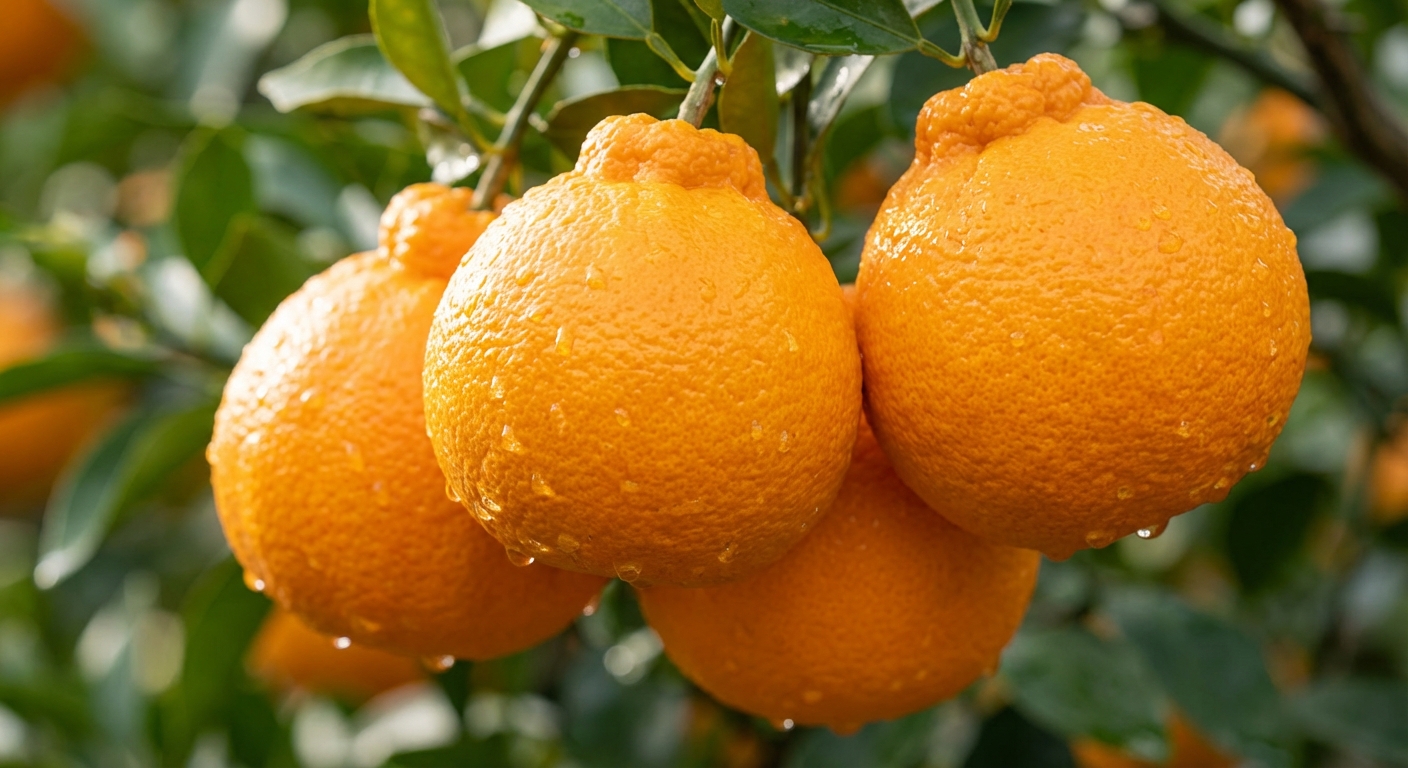
But size is just the beginning. The characteristic "topknot" or neck at the stem end makes each fruit instantly recognizable. This prominent bump isn't a defect – it's the signature of authentic Shiranui fruit.
The skin is relatively thin but separates easily from the flesh, making these mandarins perfect for hand-eating. The color ranges from deep orange to reddish-orange, with a slight glossy finish when fully ripe.
Inside, the flesh is incredibly juicy and nearly seedless when grown in isolation from other citrus varieties. The segments are large and separate cleanly, with minimal white pith or membrane.
The flavor profile is what sets Shiranui apart from every other mandarin. Initial sweetness hits your taste buds first, followed by subtle tartness that prevents the fruit from being cloying. The finish is clean and refreshing, with complex aromatic compounds that linger pleasantly.
Sugar content typically measures 13-15° Brix, with exceptional fruit reaching even higher levels. Acid content balances perfectly, usually around 0.7-1.0%, creating that ideal sweet-tart harmony that makes you reach for another segment.
Fresh eating is just the beginning. Shiranui juice makes exceptional fresh-squeezed juice, though most people find the fruit too precious to juice. The segments work beautifully in fruit salads, desserts, and savory applications where you want intense citrus flavor without overwhelming tartness.
How Do You Successfully Grow Shiranui Mandarin Trees?
Growing exceptional Shiranui fruit starts with understanding what these trees need to thrive. After decades of growing citrus professionally, we've learned that success comes down to getting the fundamentals right from day one.
The foundation is proper soil. Forget everything you've heard about "citrus potting mix." Those bark-based products suffocate roots as they decompose. Shiranui trees need permanent, mineral-based soil that provides constant aeration to roots.
This is where US Citrus Nursery's Three Plant Pillars framework becomes essential:
Pillar 1: Mineral-Based Soil - Dr. Mani's Magic Super Soil provides the permanent growing medium your Shiranui tree needs. Made from sand or sandy loam, perlite or rice hulls, and coco coir or peat moss, plus biochar, volcanic ash, and pH-balancing sulfur. This soil never needs replacing because it never decomposes.
Pillar 2: Live Microbials - Plant Super Boost delivers over 2,000 species of beneficial bacteria and 400-500 species of fungi, including mycorrhizae. These microbes protect roots, unlock nutrients, and create the soil biology that produces exceptional fruit quality.
Pillar 3: Complete Organic Fertilizer - Crab, Kelp & Amino Acids (7-4-4) provides all 12 essential nutrients without synthetic salts that kill beneficial microbes. Apply 1 ounce per inch of trunk diameter monthly during growing season.
Climate requirements are straightforward. Shiranui trees handle cold down to 28-30°F, making them suitable for USDA zones 9-11. In colder areas, container growing allows you to move trees to protected areas during winter.
These trees prefer full sun but tolerate partial shade. Six hours of direct sunlight daily produces the best fruit quality and highest sugar content.
Watering follows the standard citrus schedule, but soil type makes all the difference. In mineral-based soil, water when the top 2 inches feel dry to the touch. Always use the drench method, watering until water runs from drainage holes.
| Factor | Requirement | Notes |
|---|---|---|
| Temperature Range | 28-95°F | Protect from frost below 28°F |
| Sunlight | 6+ hours direct sun | More sun = higher sugar content |
| Soil pH | 6.0-6.5 | Super Soil is pre-adjusted to pH 6.0 |
| Container Size | 20+ gallons for mature tree | Start smaller, up-pot as tree grows |
| Humidity | 40-70% | Avoid extremely dry conditions |
Why Do Home Growers Fall in Love with Shiranui Trees?
There's something magical about harvesting your own Shiranui mandarins. When you bite into that first home-grown fruit, you understand why Japanese consumers pay premium prices for this experience.
The size alone impresses visitors. When friends see mandarins the size of small oranges hanging from your tree, they stop and stare. These aren't the tiny Clementines from the grocery store. These are statement fruits that announce your gardening success to the world.
But it's the eating experience that creates true converts. That explosion of sweetness, balanced perfectly with just enough tartness to keep things interesting. The clean finish that doesn't leave cloying aftertaste. The way the segments separate perfectly, making each bite a pleasure.
Home growers also love the harvest timing. December through February means fresh, tree-ripened citrus during the winter months when other fresh fruit options are limited and expensive. Your Shiranui tree becomes a source of vitamin C and natural sweetness when you need it most.
The trees themselves are rewarding to grow. They're vigorous without being aggressive, nearly thornless for easy maintenance, and respond beautifully to good care. When you provide the Three Plant Pillars foundation, Shiranui trees reward you with abundant, high-quality fruit.
Container growing makes Shiranui accessible to gardeners with limited space. A single tree in a large container can produce 50-100 fruits per year once mature. That's hundreds of dollars worth of premium fruit from one well-cared-for tree.
What Are Some Fascinating Facts About Shiranui Mandarins?
The post-harvest curing process that makes Shiranui so special was discovered by accident. Japanese growers noticed that fruit stored for several weeks after harvest tasted dramatically better than freshly picked fruit. Research revealed that this storage period allows citric acid to break down while sugar concentrations increase.
Different regions produce distinctly different flavor profiles in the same variety. Kumamoto Dekopon tastes noticeably different from Hiroshima Kiyopon, even though they're genetically identical. Soil minerals, climate conditions, and local growing techniques all contribute to these regional differences.
The "topknot" bump that makes Shiranui so recognizable actually serves a purpose. This protrusion indicates proper fruit development and correlates with higher sugar content. Fruit without the characteristic bump rarely achieves the same sweetness levels.
Brazilian growers have achieved something remarkable: they've adapted a Japanese winter fruit to produce year-round harvests in tropical highlands. By manipulating irrigation and fertilization timing, some Brazilian orchards harvest Shiranui fruit in multiple seasons.
The three legal accessions of Shiranui in California each have slightly different characteristics. The original Sunkist import produces the most consistent commercial fruit. The public accession from China tends to be more seedy. The Brazilian strain called "Guilietta" shows adapted traits for warmer climates.
Quality control for commercial Sumo Citrus is so strict that only about 60% of harvested fruit meets standards for retail sale. The remaining fruit gets processed into juice or other products, maintaining the premium positioning of the fresh fruit brand.
Hi-Chew candy company spent over two years perfecting their Dekopon flavor. They analyzed hundreds of fruit samples to identify the key aromatic compounds that make the flavor so distinctive and memorable.
Why Does the Shiranui Mandarin Deserve a Place in Your Garden?
If you're serious about growing exceptional citrus, Shiranui represents the pinnacle of mandarin breeding. This isn't just another citrus tree. This is your chance to grow the same variety that commands premium prices in markets worldwide.
Think about what you're really getting. A tree that produces fruit selling for $3-6 each in stores. Fruit with sugar levels that exceed most desserts. Fruit with that perfect balance of sweetness and tartness that keeps you coming back for more.
But beyond the economics, there's the pure joy of growing something extraordinary. When your friends taste your home-grown Shiranui mandarins, they'll understand immediately that you've mastered something special. This isn't beginner citrus. This is advanced fruit growing that produces professional-quality results.
The timing works perfectly for most home growers. December through February harvest means fresh fruit during winter months when your garden might otherwise be dormant. Your Shiranui tree becomes a source of brightness and sweetness during the darkest time of year.
Container growing makes this premium variety accessible regardless of your climate or space limitations. With proper soil, nutrition, and care, a single Shiranui tree can produce decades of exceptional fruit. That's a lifetime investment in your family's fresh fruit supply.
Ready to experience the legendary sweetness of Shiranui mandarins from your own tree? Browse our citrus collection to find the perfect varieties for your growing conditions. Each tree comes with complete growing instructions and access to our expert support team.
Your journey to growing world-class citrus starts with choosing exceptional varieties and providing the foundation they need to thrive. The Three Plant Pillars system gives your Shiranui tree everything it needs to produce fruit that rivals the best commercial operations.
Don't settle for grocery store citrus when you can grow premium varieties at home. Start your Shiranui mandarin tree today and discover why this Japanese creation has captured hearts and taste buds around the world.


