


Hirado Buntan Pomelo Tree, the Elegant Japanese Pomelo with Floral Sweetness
You're walking through your garden on a crisp October morning, and there it is. A massive, golden fruit hanging from your own tree, bigger than a softball, with skin so smooth it almost glows. This is the Hirado Buntan Pomelo, Japan's second most beloved citrus treasure.
Most people have never heard of this variety. That's because Big Box stores don't carry it. Why? It doesn't ship well, it takes patience to grow, and it doesn't fit their profit model of quick turnover. But for home growers who want something truly special, the Hirado Buntan offers rewards that mass-market citrus simply can't match.
This isn't just another pomelo. The Hirado Buntan carries over a century of Japanese breeding excellence, combined with modern American selections that have created what many experts consider the finest pomelo for home cultivation outside of Asia.

Organic Fertilizer | Crab, Kelp & Amino Acids (7‑4‑4) | Long-Lasting, Burn-Free Boost | Slow-Release Power for Steady Plant Growth
Key Takeaways
- Hirado Buntan is Japan's second most popular pomelo, prized for its exceptional balance of sweetness and subtle tartness
- The pink-fleshed Florida selection offers superior eating quality and is preferred for home growing
- More cold-tolerant than most pomelos, making it suitable for USDA zones 9-11
- Fruit ripens October through March, providing fresh citrus during winter months
- Trees are vigorous growers with distinctive broad-winged leaves and excellent storage fruit
- Requires the Three Plant Pillars (mineral soil, live microbes, organic fertilizer) for optimal health and production
- Alternate-bearing variety that produces massive, oblate fruits with smooth, glossy skin
What Makes the Hirado Buntan Special?
The Hirado Buntan isn't your typical grocery store citrus. This is a pomelo with a story, a heritage, and a flavor profile that has captivated Japanese growers for over a century. Unlike the thick-skinned, bitter pomelos you might find at the supermarket, the Hirado Buntan offers a perfect balance.
The fruit is large and oblate, slightly flattened at both ends, with skin that's bright yellow when fully ripe. But here's what makes it special: the flesh. In the pink-fleshed selection we grow today, you get tender, moderately juicy segments with a flavor that's sweet, slightly tart, and incredibly refreshing.
Think of it as nature's answer to artificial fruit flavors. Clean. Pure. Complex.
How Did This Japanese Treasure Reach American Gardens?
The Hirado Buntan's journey from Japan to your backyard is a fascinating tale of chance, science, and dedication. According to the UCR Citrus Variety Collection, this variety originated as a chance seedling in Nagasaki Prefecture, Japan, around 1910.
A chance seedling means this variety wasn't bred by humans. Instead, nature created something special when seeds from different pomelo varieties naturally crossed. Japanese growers recognized its potential and began cultivating it commercially.
By 1965, the USDA brought seeds to the US Horticulture Research Station in Orlando, Florida. But the real breakthrough came in the 1970s-1980s when Florida researchers made a selection that changed everything: they found a pink-fleshed variant that was superior to the original yellow-fleshed type.
This pink-fleshed selection is now considered the premium choice for home growers outside of Asia, ranking equal to South Africa's famous 'Djeroek Deleema Kopjor' pomelo in quality.
Why Did This Pomelo Become Japan's Second Favorite?
In Japan, citrus isn't just food. It's culture. The Japanese have elevated citrus growing to an art form, and they don't settle for mediocre fruit. So when the Hirado Buntan became the second most popular pomelo in Japan (after the massive Banpeiyu), that meant something significant.
Japanese growers valued the Hirado Buntan for several reasons. First, it was more cold-tolerant than other pomelos, making it suitable for Japan's varied climate zones. Second, the fruit stored exceptionally well, providing fresh citrus through the winter months. Third, the flavor was complex and satisfying, not just sweet or just tart.
In Japanese culture, pomelos are often given as gifts during the New Year period. The Hirado Buntan's impressive size, beautiful appearance, and excellent keeping quality made it perfect for this tradition. Families would display these golden orbs as symbols of prosperity and good fortune.
What Does the Hirado Buntan Tree Look Like?
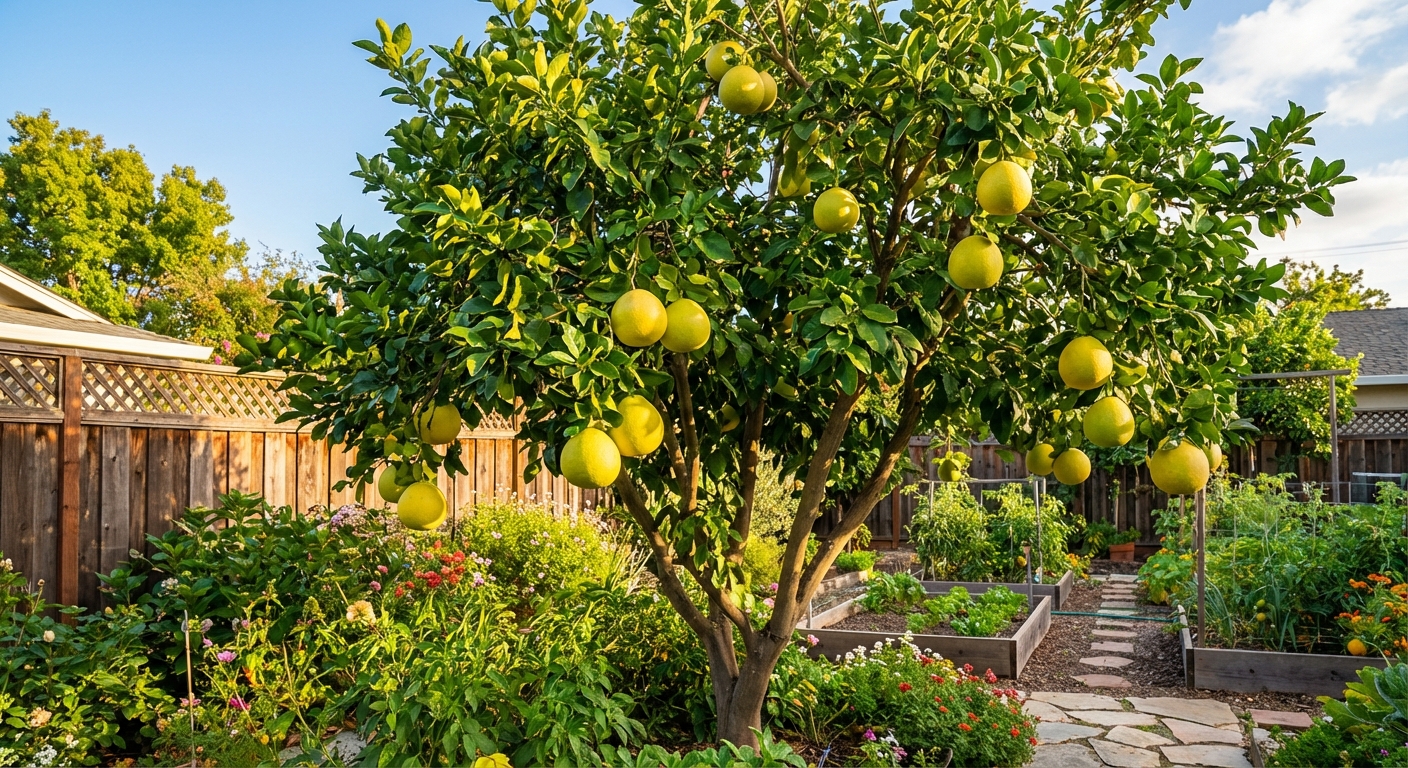
The Hirado Buntan tree is impressive even before it fruits. These are vigorous, medium-large trees with distinctive characteristics that make them stand out in any citrus collection.
The leaves are the first thing you'll notice. They're large, thick, and broadly winged, meaning the leaf stems (petioles) have wing-like extensions. This gives the entire tree a lush, tropical appearance that's more dramatic than most citrus varieties.
The tree structure is robust and well-branched, creating a rounded canopy that can reach 12-15 feet in the ground or 8-10 feet in containers. The branches are strong enough to support the large fruit without breaking, though some support may be needed during heavy crop years.
| Tree Characteristic | Description |
|---|---|
| Mature Height | 12-15 feet (ground), 8-10 feet (container) |
| Canopy Shape | Rounded, well-branched |
| Leaf Size | Large, thick |
| Leaf Wings | Broadly winged petioles |
| Growth Rate | Vigorous |
| Cold Tolerance | More cold-hardy than most pomelos |
| Bearing Habit | Alternate bearing (heavy crops every other year) |
What Does Hirado Buntan Fruit Taste Like?
Here's where the Hirado Buntan truly shines. The fruit is large, typically weighing 1-3 pounds each, with a shape that's oblate (flattened) and slightly depressed at both ends. The skin is medium-thick, smooth, and glossy, with a bright yellow color when fully ripe.
But it's the inside that matters. The pink-fleshed selection offers tender, moderately juicy segments that separate easily. The flavor is what citrus experts call "well-balanced," meaning it has enough sweetness to satisfy, enough acidity to refresh, and enough complexity to keep you coming back.
Unlike some pomelos that can be dry or bitter, the Hirado Buntan offers consistent eating quality. There's a subtle trace of bitterness that adds depth without overwhelming the fruit's natural sweetness. Think of it as the difference between a simple pop song and a complex piece of music.
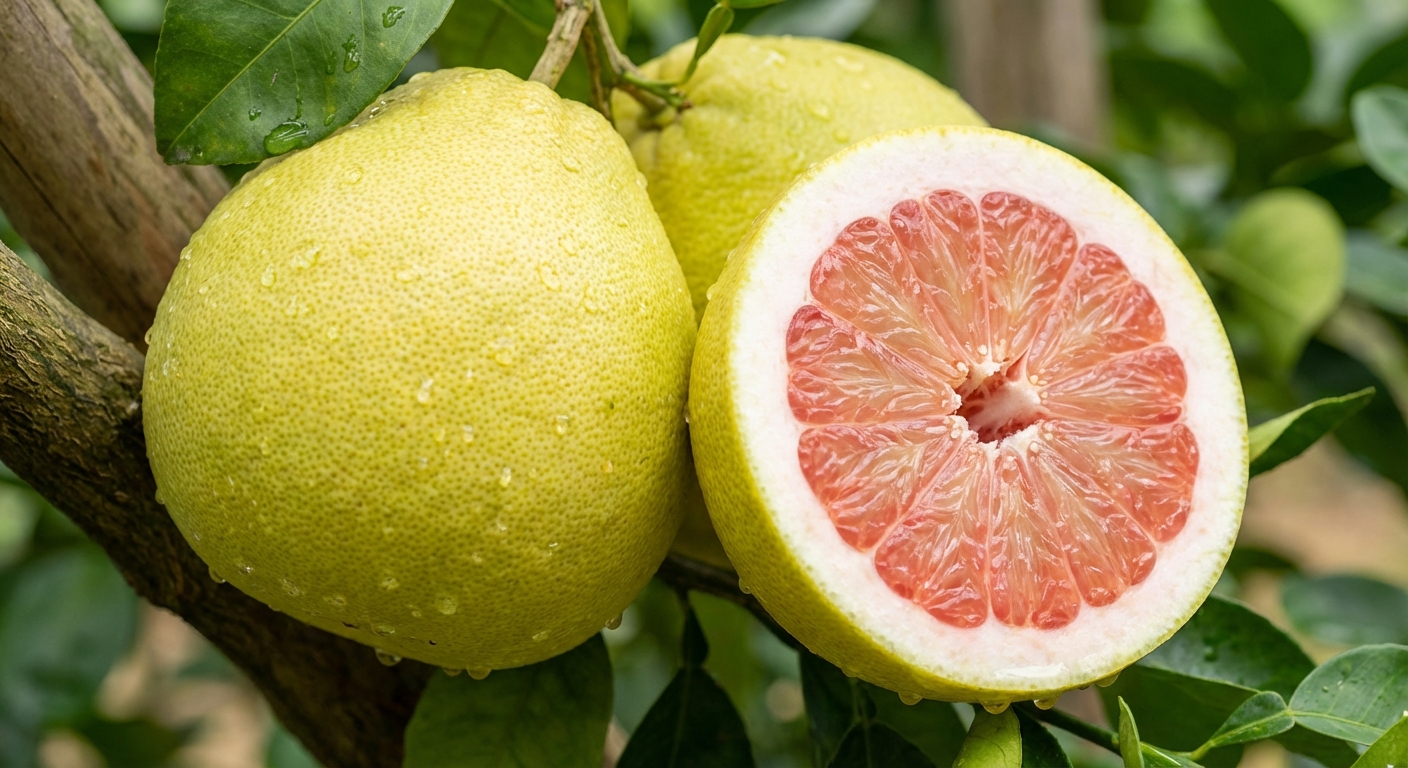
The segments have thin but tough carpellary membranes, which means they hold their shape well but aren't difficult to eat. This makes the fruit perfect for fresh eating, fruit salads, or juicing.
How Do You Use Hirado Buntan in the Kitchen?
The Hirado Buntan's versatility in the kitchen is remarkable. The large segments make beautiful additions to fruit salads, where their size and color create visual impact. The juice is excellent fresh, with enough acidity to balance the sweetness perfectly.
In Asian cuisine, pomelo segments are often used in salads with herbs, nuts, and dressing. The Hirado Buntan's firm texture holds up well to these preparations. The zest from the smooth skin adds aromatic oils to baked goods and cocktails.
Because the fruit stores so well, you can harvest in late fall and enjoy fresh segments through the winter months, providing vitamin C when you need it most.
How Do You Successfully Grow Hirado Buntan Pomelo?
Here's where most people get it wrong. They treat pomelos like oranges or lemons, and wonder why their trees struggle. Pomelos, especially varieties like the Hirado Buntan, have specific needs that must be met for success.
The key is understanding US Citrus Nursery's Three Plant Pillars, the framework we developed after growing over 250,000 citrus trees at our South Texas nursery. Miss any one of these pillars, and your tree will struggle with root rot, yellowing leaves, weak fruiting, and pest issues.
What Are the Three Plant Pillars for Hirado Buntan Success?
Pillar 1: Mineral-Based Soil
Your Hirado Buntan's roots need oxygen more than water. That potting mix from the garden center? It's pine bark sawdust that decomposes and suffocates roots within 6 months. Dr. Mani's Magic Super Soil uses mineral-based ingredients (sand, perlite, coco coir) that never decompose, providing permanent aeration for permanent plant health.
Pillar 2: Live Microbials
In nature, citrus trees rely on beneficial bacteria and fungi to unlock nutrients and protect roots. Commercial potting mixes are sterile, leaving your tree defenseless. Plant Super Boost provides full-spectrum, live microbes harvested from natural compost, not factory-grown powder that doesn't work.
Pillar 3: Organic Fertilizer & Biostimulants
Synthetic fertilizers are salt-based formulas that kill beneficial microbes and burn roots. Crab, Kelp & Amino Acids (7-4-4) provides all 12 essential nutrients in slow-release form, working with your soil biology instead of against it.
| Growing Condition | Requirement | Notes |
|---|---|---|
| USDA Zones | 9-11 | More cold-tolerant than most pomelos |
| Sun Exposure | Full sun (6-8 hours) | Morning sun essential |
| Soil pH | 6.0 (already adjusted in Super Soil) | Optimal for nutrient uptake |
| Watering | When top 2 inches dry | Varies by temperature and humidity |
| Fertilizer | Monthly with CKAA | Skip when temperatures below 40°F |
| Container Size | 25+ gallons for mature tree | Start smaller, up-pot as needed |
| Harvest Season | October-March | Peak flavor November-January |
What's the Correct Watering Schedule for Hirado Buntan?
Watering isn't about following a rigid schedule. It's about understanding your tree's needs based on conditions. In mineral-based soil, overwatering is nearly impossible because excess water drains immediately. In organic potting mix, overwatering is easy because it holds water like a sponge.
Use the drench method: water until water runs from the drainage holes. Check soil moisture by feeling the top 2 inches. When it's dry to the touch, it's time to water again.
Frequency depends on conditions:
- Under 60°F or indoors: Once per week
- 60-90°F, humid: Twice weekly
- 60-90°F, dry: Three times weekly
- Over 90°F, humid: Every other day
- Over 90°F, dry: Daily
Why Do Home Growers Fall in Love with Hirado Buntan?
There's something magical about harvesting a 2-pound pomelo from your own tree. The Hirado Buntan delivers that experience with fruit that's not just large, but genuinely delicious.
Home growers love this variety because it's forgiving. The tree is vigorous and adapts well to container growing. The fruit stores exceptionally well, so you can harvest in fall and enjoy fresh segments through winter. And unlike many pomelos that can be disappointing to eat, the Hirado Buntan consistently delivers great flavor.
The alternate-bearing habit means you get massive crops every other year, with lighter crops in between. This gives the tree time to recover and ensures the fruit quality remains high.
For families, there's something special about sharing segments of a giant pomelo. Children are amazed by the size, and adults appreciate the complex flavor that develops when the fruit is properly grown.
What Are Some Fascinating Facts About Hirado Buntan?
Here are some remarkable details about this Japanese treasure that most people never learn:
The Pink Revolution: The original Hirado Buntan had yellow flesh. The pink-fleshed selection that we grow today was discovered in Florida and is now considered superior to the original Japanese type.
Storage Champion: Properly stored Hirado Buntan fruit can last 3-4 months after harvest, making it one of the longest-keeping citrus varieties. Japanese families would harvest in fall and enjoy fresh fruit well into spring.
The Nagasaki Connection: This variety originated in Nagasaki Prefecture, the same region where Dutch traders first introduced European citrus varieties to Japan. The Hirado Buntan represents the full circle of citrus exchange between East and West.
Scientific Recognition: Citrus experts rank the pink-fleshed Hirado Buntan equal to South Africa's premium 'Djeroek Deleema Kopjor' pomelo, which is considered one of the world's finest pomelos.
The Alternate Year Mystery: Like many high-quality citrus varieties, Hirado Buntan is alternate-bearing. This isn't a flaw; it's nature's way of ensuring fruit quality. Heavy crop years are followed by rest years, allowing the tree to build energy for the next spectacular harvest.
Why Does the Hirado Buntan Deserve a Place in Your Garden?
If you're looking for a citrus tree that offers something truly special, the Hirado Buntan checks every box. This isn't a variety you'll find at big box stores or even most nurseries. It's a connoisseur's choice that rewards patience with exceptional fruit.
The tree is beautiful year-round with its large, winged leaves and vigorous growth habit. When fruit develops, each pomelo becomes a conversation piece. And when you taste the perfectly balanced flesh, you'll understand why Japan made this their second-favorite pomelo.
For home growers who appreciate quality over quantity, who want something unique in their garden, and who enjoy sharing special fruit with family and friends, the Hirado Buntan offers rewards that mass-market citrus simply cannot match.
The best part? With proper care using the Three Plant Pillars, your Hirado Buntan tree can produce this exceptional fruit for decades. It's not just a tree; it's a legacy.
Ready to experience Japan's citrus excellence in your own garden? Browse our citrus collection to find the perfect tree for your growing conditions, and discover why thousands of home growers trust US Citrus Nursery for their citrus dreams.
Frequently Asked Questions
1. What is a Hirado Buntan Pomelo?
Hirado Buntan is a Japanese pomelo variety that originated as a chance seedling in Nagasaki Prefecture around 1910. It is known for its large, oblate fruit, balanced sweet-tart flavor, excellent storage ability, and vigorous growth. A pink-fleshed selection developed in Florida is particularly valued for home growing.
2. What does Hirado Buntan Pomelo taste like?
Hirado Buntan Pomelo has a balanced flavor that combines natural sweetness with subtle tartness and mild bitterness. The pink-fleshed selection has tender, moderately juicy segments with a refreshing, complex citrus flavor that is excellent for fresh eating, salads, and juicing.
3. When does Hirado Buntan Pomelo ripen?
Hirado Buntan Pomelo generally ripens from October through March, with peak flavor typically occurring from November through January. Its excellent storage quality allows harvested fruit to be enjoyed throughout the winter.
4. How big does a Hirado Buntan Pomelo get?
Hirado Buntan produces large pomelos that typically weigh 1–3 pounds each. The fruit has a distinctive oblate shape, smooth glossy yellow skin, and pink flesh in the Florida selection.
5. How big does a Hirado Buntan Pomelo tree get?
A mature Hirado Buntan Pomelo tree can reach approximately 12–15 feet tall when grown in the ground, with a rounded, well-branched canopy. Container-grown trees can typically reach around 8–10 feet, depending on container size and growing conditions.
6. Can Hirado Buntan Pomelo be grown in containers?
Yes. Hirado Buntan Pomelo adapts well to container growing and is suitable for gardeners with limited space or colder climates. A container of 25 gallons or larger is recommended for a mature tree. Container-grown trees can also be moved to protected areas during cold weather.
7. What USDA zones are best for growing Hirado Buntan Pomelo?
Hirado Buntan Pomelo is best suited to USDA Zones 9–11. It is considered more cold-tolerant than many other pomelo varieties, but it still performs best in warm conditions with protection from severe cold.
8. How often should you water a Hirado Buntan Pomelo tree?
Watering should be based on soil moisture and weather rather than a fixed calendar schedule. Check the top 2 inches of soil and water when it feels dry. Water deeply until excess water drains from the container or soil. Hot, dry conditions require more frequent watering than cool or humid conditions.
9. Why is the pink-fleshed Hirado Buntan Pomelo considered special?
The pink-fleshed Hirado Buntan is a Florida selection valued for its superior eating quality. It combines tender, moderately juicy flesh with a balanced sweet-tart flavor and attractive pink color. Citrus experts have considered this selection comparable in quality to premium pomelo varieties such as 'Djeroek Deleema Kopjor.'
10. How do you grow a healthy Hirado Buntan Pomelo tree?
Successful Hirado Buntan cultivation requires full sun, well-draining soil, appropriate watering, and regular nutrition. US Citrus Nursery recommends its Three Plant Pillars approach: mineral-based soil for root aeration, live microbial support for the root zone, and complete organic nutrition. Container-grown trees should have adequate drainage and be protected from freezing temperatures.
About the Author
Ron Skaria, MD
Ron Skaria is the son of Dr. Mani. He trained as a medical doctor at Baylor College of Medicine, did his residency at UT Health Science Center - San Antonio and fellowship training at Texas Tech University. He now works full time on the family farm at US Citrus and US Citrus Nursery in Hargill, Texas, building Dr. Mani's Magic alongside his dad. He wrote the Brown Thumb Field Guide to put his father's 48 years of plant science into plain words any gardener can use. His belief is simple. You never had a brown thumb. You just never had the right help.


