


Washington Navel Orange Tree, the Historic Seedless Orange That Built California's Citrus Empire
A single orange tree changed the entire economy of Southern California. That tree was the Washington Navel Orange, and its story reads like a Hollywood script. From a mysterious bud sport in Brazil to becoming the foundation of California's multi-billion dollar citrus industry, this remarkable tree literally built an empire.
But here's what most people don't know. The Washington Navel Orange almost didn't make it to California at all. The original trees sent to Florida completely failed. It took one determined woman in Riverside, California, to nurture these precious seedlings into the trees that would transform the American West.
Today, when you bite into a perfect, seedless navel orange in winter, you're tasting history. You're experiencing the exact same fruit that amazed citrus growers in the 1870s and launched California's agricultural revolution.

Organic Fertilizer | Crab, Kelp & Amino Acids (7‑4‑4) | Long-Lasting, Burn-Free Boost | Slow-Release Power for Steady Plant Growth
Key Takeaways
- The Washington Navel Orange originated from a bud sport in Brazil around 1810-1820
- Only 12 trees were imported to the US in 1870, with just two surviving to build California's citrus empire
- These oranges are completely seedless due to their inability to produce viable pollen
- Peak harvest season is November through January, with fruit holding well on the tree for months
- The distinctive "navel" is actually a small secondary fruit that develops at the apex
- Washington Navels require specific climate conditions and are sensitive to heat during bloom
- This variety launched the commercial citrus industry in California and remains a premium choice for home growers
What Makes the Washington Navel Orange So Special?
The Washington Navel Orange isn't just another citrus variety. It's the tree that proved seedless oranges could be profitable, delicious, and reliable. When citrus growers first saw these large, easy-peeling, completely seedless fruits, they knew they had discovered something revolutionary.
The secret lies in a fascinating genetic quirk. Washington Navel Orange flowers produce cream-colored anthers that contain no viable pollen. This means the trees can't pollinate other citrus varieties, and they can't produce seeds in their own fruit. What might seem like a disadvantage became the variety's greatest strength.
Seedless oranges were easier to eat, shipped better, and commanded premium prices in markets across America. Within just ten years of arriving in California, the Washington Navel had become the most widely planted orange variety in the region.
Where Did the Washington Navel Orange Come From?
The true origins of the Washington Navel Orange remain shrouded in mystery, but the most credible evidence points to early 19th century Brazil. According to research documented in the UCR Citrus Variety Collection, this remarkable variety likely emerged as a bud sport from a Selecta orange tree near Bahia, Brazil, sometime between 1810 and 1820.
A bud sport is nature's way of creating genetic variants. When a single branch on a tree suddenly produces fruit that's dramatically different from the rest of the tree, that's a bud sport. In this case, one branch on a seedy Selecta orange tree began producing large, completely seedless oranges with that distinctive navel formation.
Local Brazilian growers recognized the superiority of these new oranges immediately. The fruit was larger, sweeter, easier to peel, and completely seedless. Word of this amazing new orange variety spread among travelers and citrus enthusiasts throughout the 1800s.
Some researchers believe the Washington Navel might have even earlier origins, possibly descending from the Portuguese navel orange (Umbigo) described by botanists Risso and Poiteau in their comprehensive citrus studies between 1818 and 1822. This would push the variety's origins back even further into citrus history.
How Did the Washington Navel Orange Reach America?
The journey from Brazil to California reads like an adventure novel. The Washington Navel Orange actually made several attempts to establish itself in different countries before finding its perfect home.
The variety first left Brazil in 1824 when trees were sent to Australia. Australian growers immediately recognized the fruit's potential, and the variety established itself successfully in the Australian climate. From Australia, trees were sent to California as early as 1870, creating one pathway for the variety's introduction to North America.
But the introduction that would change history happened through a different route entirely. In 1870, William O. Saunders, superintendent of gardens and grounds for the U.S. Department of Agriculture in Washington D.C., received twelve budded Washington Navel Orange trees directly from Bahia, Brazil.
These twelve trees were planted in a greenhouse in Washington D.C., where they were carefully propagated. The Department of Agriculture then sent young trees to both California and Florida, hoping to establish commercial citrus production in both states.
The Florida trees failed completely. The climate, soil conditions, or local diseases proved too challenging for the Washington Navels to survive. But in California, something magical happened.
The Eliza Tibbets Story: Two Trees That Built an Empire
In 1873, two precious Washington Navel Orange trees arrived at the home of Eliza Tibbets in Riverside, California. These weren't just any trees. They were direct descendants of those original twelve trees growing in the USDA greenhouse in Washington D.C.
Eliza Tibbets was a determined woman who understood the value of what she had received. She planted these two trees in her backyard and cared for them with extraordinary attention to detail. The climate in Riverside proved absolutely perfect for Washington Navels.
The trees thrived beyond anyone's expectations. They produced large, beautiful, completely seedless oranges that were sweeter and easier to peel than anything local growers had ever seen. Word spread quickly through the citrus growing community.
Within just one decade, every serious citrus grower in Southern California wanted Washington Navel Orange trees. Budwood from those original two trees in Eliza Tibbets' yard was grafted onto rootstock throughout the region. The variety that had failed in Florida became the foundation of California's citrus empire.
By 1885, the Washington Navel Orange was the most widely planted citrus variety in California. Those two trees in Riverside had launched an agricultural revolution that would generate billions of dollars in economic activity over the following century.
Why Do People Call Them "Washington" Navel Oranges?
The name tells the whole story. These oranges were originally called "Bahia" navels after the Brazilian city where they originated. But when they arrived in the United States through the Department of Agriculture in Washington D.C., they became known as "Washington" navels.
The "navel" part of the name comes from the fruit's most distinctive feature. At the blossom end of each orange, you'll find a small secondary fruit that looks remarkably like a human navel. This navel can be barely visible or quite prominent, sometimes even protruding from the main fruit.
This navel formation is actually a fascinating botanical phenomenon. It's a secondary fruit that develops within the primary fruit, created by the same genetic factors that make these oranges seedless. The navel is completely edible, though it's sometimes less sweet than the main fruit.
| Name Origin | Meaning | Time Period |
|---|---|---|
| Bahia Navel | Named after Brazilian city of origin | 1810-1870 |
| Washington Navel | Named after USDA propagation in Washington D.C. | 1870-present |
| Navel Formation | Secondary fruit resembling human navel | Genetic trait |
What Does the Washington Navel Orange Tree Look Like?
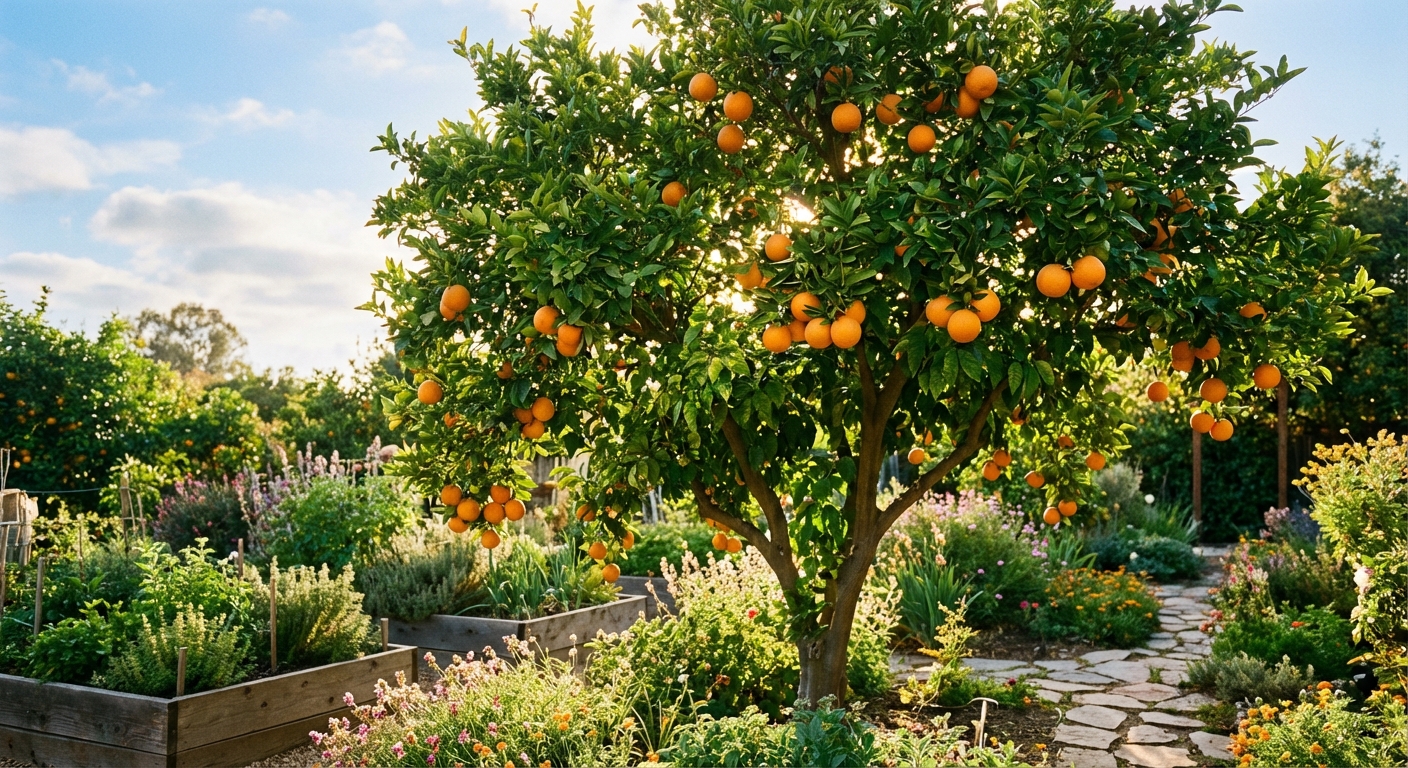
Washington Navel Orange trees have a distinctive appearance that experienced citrus growers can recognize from a distance. These trees develop a characteristically round-topped, somewhat drooping canopy that gives them an elegant, mature appearance even when relatively young.
The trees are moderate in size and vigor compared to other citrus varieties. Don't expect a Washington Navel to become a towering giant. Instead, these trees develop into well-proportioned, manageable specimens that rarely exceed 20 feet in height, making them perfect for home gardens and container growing.
The leaves are typical citrus: glossy, dark green, and aromatic when crushed. The branches tend to grow in a slightly weeping pattern, creating that characteristic drooping canopy shape. This growth habit actually helps protect the fruit from sun damage and makes harvesting easier.
During bloom season (typically late winter to early spring), Washington Navel trees produce clusters of fragrant white flowers. Here's where things get interesting: those flowers have cream-colored anthers that contain no viable pollen. This is the genetic trait that makes the fruit seedless, but it also means these trees can't pollinate other citrus varieties.
The fruit develops over 8-10 months, reaching full size by late fall. Mature Washington Navel oranges are large, typically 3-4 inches in diameter, with a slightly pebbled, deep orange rind that peels easily. The distinctive navel formation is visible as a small circular area at the blossom end of each fruit.
How Do Washington Navel Oranges Taste and What Are They Used For?
Take your first bite of a perfectly ripe Washington Navel Orange, and you'll understand why this variety built an empire. The flavor is sweet with just enough acidity to create perfect balance. The flesh is firm but juicy, with a rich, complex taste that's both refreshing and satisfying.
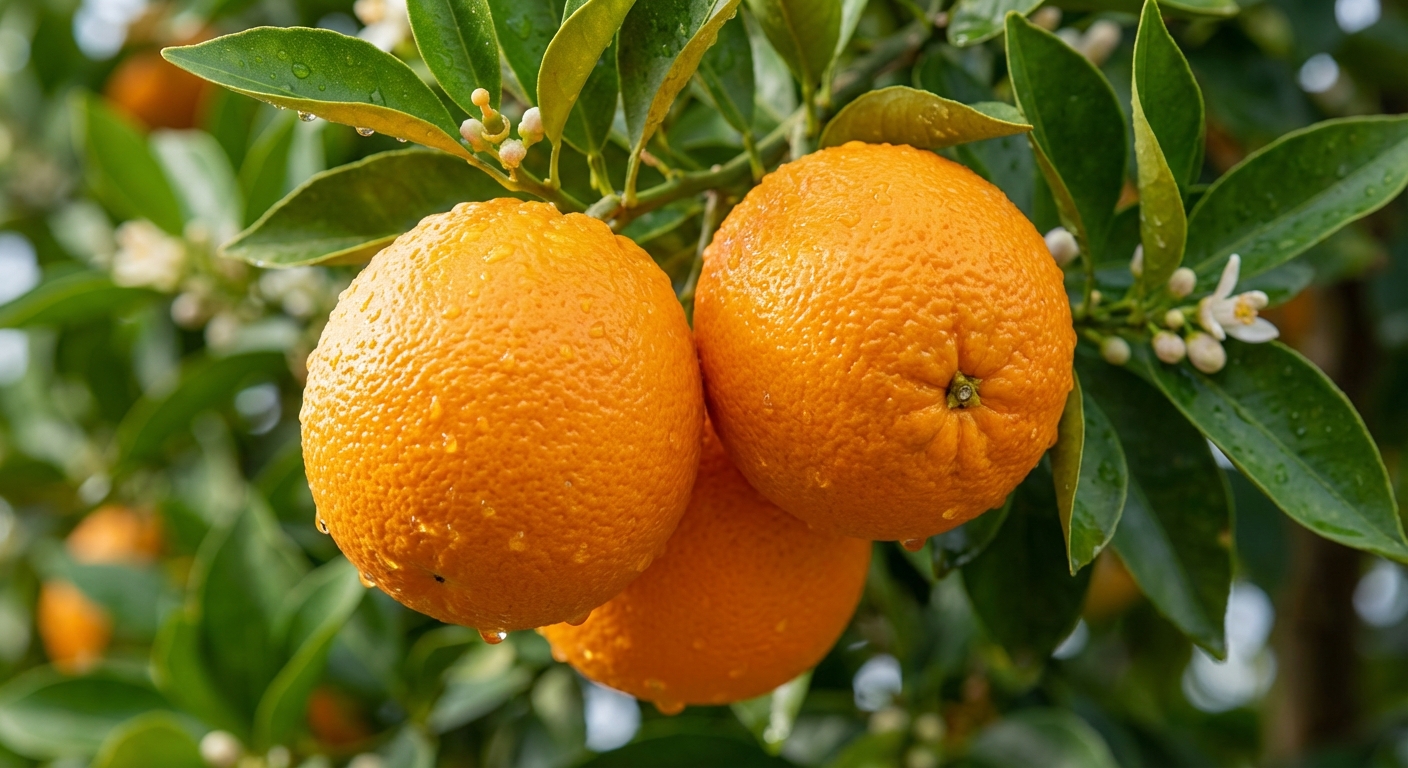
The texture is what sets Washington Navels apart from many other orange varieties. The flesh is firm enough to hold its shape when segmented, making these oranges perfect for fruit salads, desserts, and fresh eating. Each segment separates cleanly, and the complete absence of seeds makes eating effortless.
The rind peels easily, often coming off in large sections rather than tiny pieces. This easy-peeling characteristic made Washington Navels incredibly popular for fresh consumption, especially for packed lunches and snacks.
In the kitchen, Washington Navel oranges excel in applications where you want distinct orange segments:
- Fresh fruit salads where seedless segments are essential
- Desserts requiring clean, attractive orange pieces
- Breakfast preparations where easy peeling matters
- Juice blending (though they're less juicy than Valencia oranges)
- Zest and rind applications for baking and cooking
- Marmalades and preserves where the navel adds interesting texture
However, Washington Navels are not ideal for commercial juice production. Their lower juice content and firm flesh make them less efficient for juice extraction compared to varieties like Valencia oranges. But for fresh eating, they're absolutely perfect.
How Do You Successfully Grow Washington Navel Orange Trees?
Growing Washington Navel Orange trees successfully requires understanding their specific needs and preferences. These trees are more sensitive to environmental conditions than some other citrus varieties, but when their requirements are met, they produce exceptional fruit for decades.
The key to success lies in what we call the Three Plant Pillars: mineral-based soil, live microbials, and complete organic fertilizer. This system, developed through decades of growing over 250,000 citrus trees at our South Texas nursery, ensures your Washington Navel gets everything it needs to thrive.
What Climate Do Washington Navel Oranges Need?
Washington Navel oranges are sensitive to heat and aridity during their bloom and fruit-setting period. This sensitivity actually restricts where they can be grown successfully, but it also explains why they perform so exceptionally well in ideal conditions.
These trees prefer Mediterranean-type climates with mild, humid winters and warm (not hot) summers. They need enough winter chill to set fruit properly, but protection from hard freezes that can damage both tree and fruit.
In container growing, you can create the perfect climate by moving trees to protected locations during extreme weather. This flexibility makes Washington Navels excellent choices for home growers who can provide seasonal protection.
| Climate Factor | Ideal Conditions | Critical Periods |
|---|---|---|
| Winter Temperature | 40-60°F | Fruit development |
| Summer Temperature | 70-85°F | Bloom and fruit set |
| Humidity | Moderate to high | Flowering period |
| Freeze Protection | Above 28°F | Year-round |
What Soil Do Washington Navel Orange Trees Require?
Here's where most home growers make their biggest mistake. They plant their precious Washington Navel Orange tree in regular potting mix, thinking it's "good enough." That potting mix is actually pine bark sawdust that will decompose and suffocate your tree's roots within six months.
Washington Navel Orange trees need permanent, mineral-based soil that never decomposes. This provides the constant aeration their roots require to stay healthy. When roots can't get oxygen, you get root rot, yellowing leaves, and eventually a dead tree.
Dr. Mani's Magic Super Soil provides exactly what Washington Navel Orange trees need: one-third sand or sandy loam, one-third perlite or rice hulls, and one-third coco coir or peat moss, plus biochar, organic fertilizer, sulfur for pH control, volcanic ash, and live microbes.
This soil never needs replacing because it never decomposes. It's a permanent investment in your tree's health that pays dividends for decades.
How Do You Fertilize Washington Navel Orange Trees?
Forget everything you've heard about synthetic fertilizers. Those blue crystals from the garden center are salt-based formulas that kill the beneficial microbes in your soil and burn your tree's roots. Washington Navel Orange trees need complete, organic nutrition that works with nature, not against it.
Dr. Mani's Magic Crab, Kelp & Amino Acids (7-4-4) provides all twelve essential nutrients your tree needs: nitrogen, phosphorus, potassium, plus calcium, magnesium, sulfur, iron, zinc, manganese, copper, boron, and molybdenum. This complete organic fertilizer contains no synthetic salts, no biosludge, and no PFAS "forever chemicals."
Apply one ounce per inch of trunk diameter monthly during the growing season. Skip fertilization when temperatures drop below 40°F, as your tree goes dormant and can't process nutrients effectively.
Why Do Washington Navel Orange Trees Need Live Microbes?
This is the secret that the big garden centers don't want you to know. In nature, citrus trees don't grow alone. They partner with billions of beneficial bacteria and fungi that live around their roots. These microbes unlock nutrients, protect against diseases, and help your tree build resilience against stress.
Most commercial "microbe" products are dried powders from factory vats that don't work in real soil conditions. Dr. Mani's Magic Plant Super Boost contains over 2,000 species of live bacteria and 400-500 species of live fungi, harvested from natural compost and stabilized with our proprietary method.
Apply two ounces per gallon of water monthly. These live microbes create the invisible support system that keeps your Washington Navel Orange tree healthy and productive for decades.
Why Do Home Growers Love Washington Navel Orange Trees?
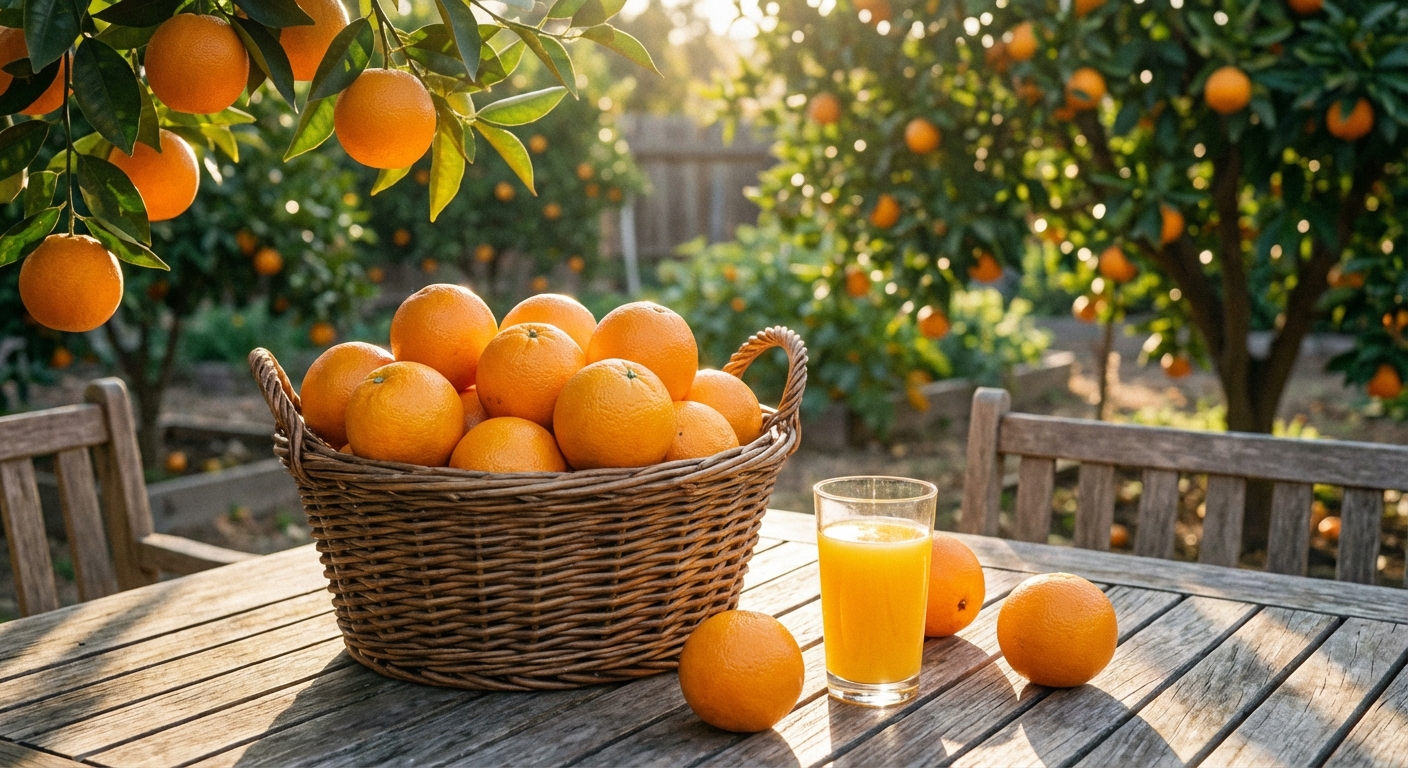
There's something magical about harvesting your own Washington Navel oranges on a crisp winter morning. The fruit holds beautifully on the tree for months after reaching maturity, which means you can pick fresh oranges throughout the winter and early spring.
Home growers consistently tell us their Washington Navel Orange tree becomes the centerpiece of their garden. The manageable size makes it perfect for smaller spaces, while the drooping, rounded canopy creates an attractive focal point year-round.
The completely seedless fruit is perfect for families with children. No more picking seeds out of orange segments or worrying about little ones choking on seeds. Every bite is pure, sweet orange flavor.
Container growing makes Washington Navels accessible to gardeners in colder climates. You can grow these historic trees on patios, decks, or in greenhouses, moving them to protection during harsh weather.
Perhaps most importantly, growing your own Washington Navel Orange connects you to agricultural history. Every fruit you harvest carries the genetic legacy of those original trees that built California's citrus empire.
What Are Some Amazing Facts About Washington Navel Oranges?
The story of Washington Navel Oranges is filled with remarkable details that most people never learn. Here are some fascinating facts that showcase just how special this variety really is:
The original two trees planted by Eliza Tibbets in Riverside still exist today. One of them, now over 150 years old, is preserved as a living monument to California's citrus heritage. You can visit this historic tree and see the actual parent of millions of Washington Navel Orange trees worldwide.
Every single Washington Navel Orange tree in existence today descends from those original twelve trees imported from Brazil in 1870. This means every Washington Navel Orange you've ever eaten shares the exact same genetic heritage.
The variety's inability to produce viable pollen actually became its greatest commercial advantage. Seedless oranges commanded premium prices and were easier to market to consumers who were tired of dealing with seeds in their fruit.
Washington Navel Oranges launched the first major agricultural marketing campaigns in American history. California growers developed branded shipping crates, advertising campaigns, and quality standards that became the model for modern agricultural marketing.
The timing of Washington Navel harvest (November through January) perfectly complemented other citrus varieties, extending the fresh citrus season and maximizing orchard profitability. This timing also made them the perfect "Christmas orange" for holiday celebrations.
Despite their Brazilian origins, Washington Navel Oranges never achieved the same commercial success in their homeland. The variety found its perfect expression in California's unique climate and became more successful in its adopted home than in its place of origin.
Why Does the Washington Navel Orange Tree Deserve a Place in Your Garden?
Growing a Washington Navel Orange tree means becoming part of one of agriculture's greatest success stories. This isn't just any citrus tree. This is the variety that proved seedless oranges could be commercially viable, that built California's agricultural economy, and that continues to set the standard for premium fresh oranges.
When you plant a Washington Navel Orange tree, you're investing in decades of winter fruit production. These trees live for 50-75 years or more with proper care, producing hundreds of pounds of premium oranges over their lifetime. Calculate the grocery store cost of that much organic, tree-ripened fruit, and the economic value becomes clear immediately.
But the real value goes beyond economics. There's something profoundly satisfying about walking into your garden on a January morning and picking fresh oranges for breakfast. The fruit you harvest will be sweeter, more flavorful, and more nutritious than anything you can buy in stores.
The manageable size and attractive growth habit make Washington Navel Orange trees perfect for home landscapes. They provide year-round beauty, seasonal fragrance during bloom, and the practical benefit of fresh fruit production.
For container growers, Washington Navels offer the flexibility to create perfect growing conditions regardless of local climate. You can move your tree to optimize sun exposure, protect from harsh weather, and ensure consistent fruit production year after year.
Most importantly, you'll be growing a piece of living history. Every orange you harvest connects you to Eliza Tibbets, to those original Brazilian trees, and to generations of citrus growers who recognized something special in this remarkable variety.
Ready to grow your own piece of citrus history? Browse our citrus tree collection to find the perfect Washington Navel Orange tree for your garden. Each tree comes with Dr. Mani's Magic Super Soil for the perfect growing foundation, plus our complete care guide to ensure your success from day one.
Your Washington Navel Orange tree is waiting to begin its next chapter in your garden. The same genetic heritage that built California's citrus empire can now create your own backyard orchard legacy.
Frequently Asked Questions
1. What is a Washington Navel Orange?
A Washington Navel Orange is a seedless sweet orange variety that originated from a natural bud sport in Brazil in the early 1800s. It became famous in California after two trees were planted by Eliza Tibbets in Riverside in 1873. Today, it is one of the most popular oranges for fresh eating because of its sweet flavor, easy-to-peel skin, firm flesh, and complete lack of seeds.
2. Where did Washington Navel Oranges originate?
Washington Navel Oranges originated in Brazil, most likely near Bahia between 1810 and 1820. The variety is believed to have developed as a natural bud mutation, or bud sport, on a Selecta orange tree. The trees were later introduced to the United States in 1870 and became especially successful in Southern California.
3. Why are Washington Navel Oranges seedless?
Washington Navel Oranges are seedless because their flowers do not produce viable pollen. Their unique genetics prevent normal seed development, allowing the tree to produce fruit without viable seeds. This natural seedlessness became one of the variety's greatest commercial advantages because the oranges are easy to eat and highly desirable for fresh consumption.
4. Why is it called a Washington Navel Orange?
The name "Washington Navel" comes from two characteristics of the variety's history. "Washington" refers to the U.S. Department of Agriculture's propagation work in Washington, D.C., where trees imported from Brazil were grown before being distributed. "Navel" refers to the small secondary fruit that develops at the blossom end of the orange and resembles a human navel.
5. When are Washington Navel Oranges in season?
Washington Navel Oranges typically reach peak harvest between November and January. In suitable climates, mature fruit can remain on the tree for several months after reaching maturity, giving home growers an extended winter harvest. This makes Washington Navels especially popular for fresh winter oranges.
6. What do Washington Navel Oranges taste like?
Washington Navel Oranges have a sweet, balanced flavor with moderate acidity, firm juicy flesh, and a rich citrus aroma. Their segments separate easily, the rind peels cleanly, and the absence of seeds makes them particularly convenient for fresh eating. They are generally better suited to eating fresh than commercial juice production.
7. Can Washington Navel Orange trees be grown in containers?
Yes, Washington Navel Orange trees can be grown successfully in large containers. Container growing is especially useful in colder climates because the tree can be moved to a protected location during freezing weather. Provide full sunlight, excellent drainage, adequate root space, and regular nutrition for healthy growth and fruit production.
8. What climate is best for Washington Navel Orange trees?
Washington Navel Orange trees perform best in Mediterranean-type climates with mild winters and warm, moderate summers. They are sensitive to extreme heat during flowering and fruit set and can be damaged by hard freezes. Container growing allows gardeners in less suitable climates to move the tree indoors or into a protected area during extreme weather.
9. How do you care for a Washington Navel Orange tree?
To care for a Washington Navel Orange tree, provide full sun, excellent drainage, consistent but controlled watering, and complete nutrition during active growth. Avoid waterlogged soil and protect the tree from freezing temperatures. Container-grown trees should be planted in a well-draining growing medium and monitored closely for moisture, nutrient, and temperature stress.
10. Why should you grow a Washington Navel Orange tree at home?
Washington Navel Orange trees are excellent backyard citrus trees because they produce sweet, seedless fruit, have an attractive manageable growth habit, and provide an extended winter harvest. They also have major historical significance as the variety that helped establish California's commercial citrus industry. For home gardeners, growing one provides fresh winter fruit while preserving a unique piece of American citrus history.
About the Author
Ron Skaria, MD
Ron Skaria is the son of Dr. Mani. He trained as a medical doctor at Baylor College of Medicine, did his residency at UT Health Science Center - San Antonio and fellowship training at Texas Tech University. He now works full time on the family farm at US Citrus and US Citrus Nursery in Hargill, Texas, building Dr. Mani's Magic alongside his dad. He wrote the Brown Thumb Field Guide to put his father's 48 years of plant science into plain words any gardener can use. His belief is simple. You never had a brown thumb. You just never had the right help.


