


Pineapple Orange Tree Guide: Florida's Tropical-Scented Citrus
You're walking through a Florida citrus grove in the 1890s, and suddenly a sweet, tropical fragrance stops you in your tracks. It's not pineapple you're smelling, but something even better. An orange tree with fruit so aromatic, so perfectly balanced between sweet and tangy, that growers renamed it after that beloved tropical fruit.
That's the Pineapple Orange Tree. And if you've never heard of this Florida treasure, you're not alone. Despite being Florida's principal midseason variety for over 130 years, most home growers have never experienced the pure joy of growing their own Pineapple oranges.
Here's what makes this tree special: it produces some of the most fragrant, flavorful oranges you'll ever taste. The fruit has a delicate pineapple-like aroma that earned it its name in the 1880s. And unlike many citrus varieties that struggle in containers, the Pineapple Orange Tree thrives when you give it what it really needs.

Organic Fertilizer | Crab, Kelp & Amino Acids (7‑4‑4) | Long-Lasting, Burn-Free Boost | Slow-Release Power for Steady Plant Growth
Key Takeaways
- The Pineapple Orange Tree originated in Florida around 1860 and became the state's principal midseason variety after the devastating 1894-95 freeze
- Named for its distinctive tropical fragrance, not its flavor, though the fruit offers rich sweetness with complex citrus notes
- Produces medium-sized, well-colored oranges with tender, juicy flesh perfect for fresh eating and processing
- Thornless variety that's highly productive but more frost-sensitive than other sweet oranges
- Thrives in containers when grown with mineral-based soil, live microbes, and complete organic nutrition (The Three Plant Pillars)
- Fruit ripens midseason and doesn't hold on the tree as long as some varieties, making harvest timing important
- Excellent choice for home growers who want authentic Florida citrus heritage in their backyard
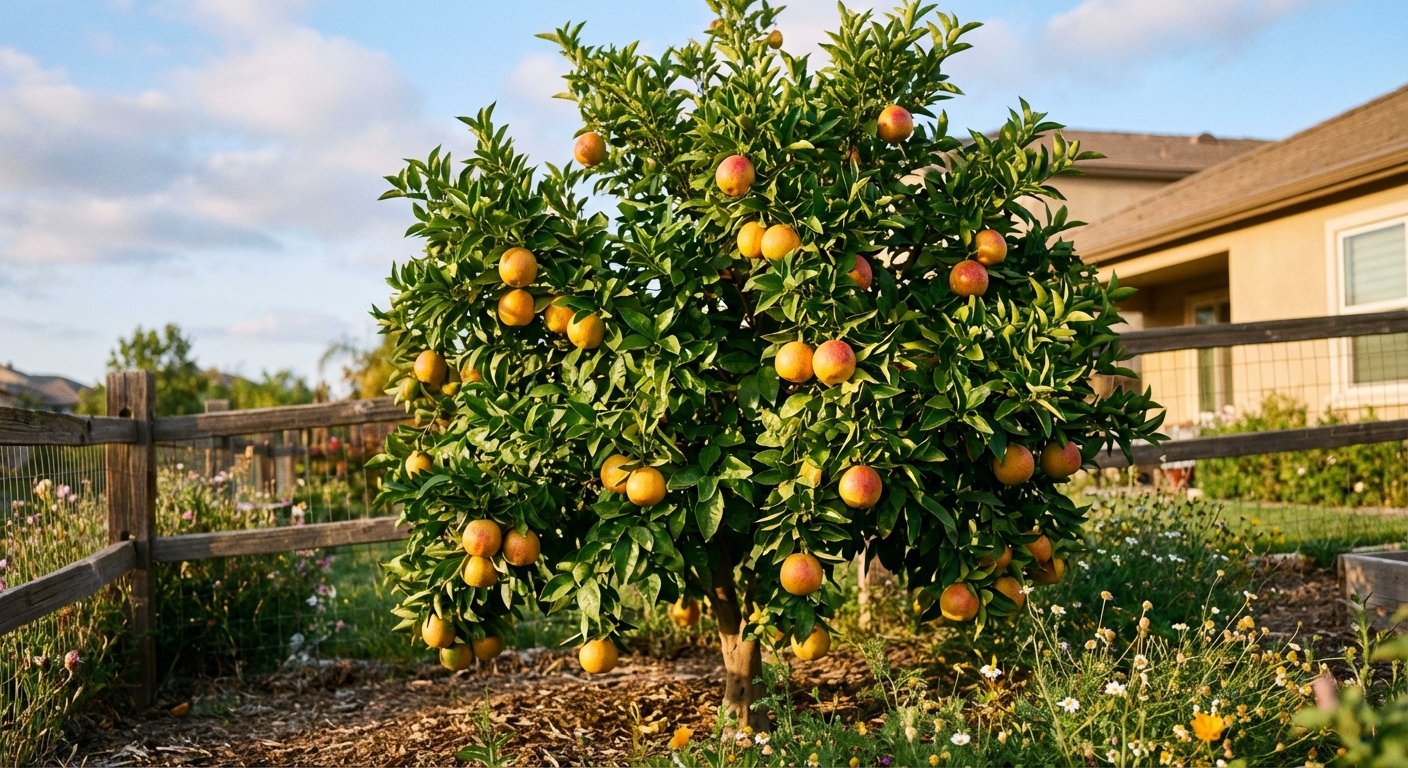
What Makes the Pineapple Orange Tree Special?
The Pineapple Orange Tree isn't just another sweet orange. This variety carries the soul of Old Florida citrus culture, born from a single seedling that would reshape an entire industry.
What sets it apart? The fragrance hits you first. When you peel a fresh Pineapple orange, that tropical aroma fills the air. It's subtle but unmistakable, like walking into a room where someone just cut fresh pineapple. But the flavor? Pure orange perfection. Rich, sweet, complex.
The tree itself tells a story of resilience. After the brutal 1894-95 freeze destroyed much of Florida's citrus industry, growers needed varieties that could rebuild their groves quickly. The Pineapple Orange Tree stepped up. It grew vigorously, produced heavily, and gave Florida growers exactly what they needed: reliable income from premium fruit.
Today, that same resilience makes it perfect for home growers. You get a piece of citrus history that actually produces results in your backyard.
Where Did the Pineapple Orange Tree Come From?
Every great citrus story starts with a seed. And the Pineapple Orange Tree's story begins around 1860 on the property of J.B. Owens near Citra, Florida. According to historical records from the UCR Citrus Variety Collection, this variety originated as a chance seedling from seed planted soon after 1860.
Here's where it gets interesting. P.P. Bishop first propagated this seedling around 1873, but he called it "Hickory." Not exactly the most appetizing name for an orange, right? But about ten years later, something magical happened. The fruit's delicate fragrance became so well-known that growers renamed it "Pineapple" after that tropical aroma.
The timing couldn't have been better. The variety gained some popularity through the 1880s, but it was the devastating freeze of 1894-95 that really launched the Pineapple Orange into citrus history. When Florida growers needed to replant thousands of acres, they chose varieties that could deliver results fast. The Pineapple Orange Tree fit perfectly.
By the early 1900s, it became Florida's principal midseason variety. And it has held that position ever since, producing millions of boxes of oranges for both fresh consumption and juice processing.
How Did Pineapple Oranges Spread Beyond Florida?
Success breeds imitation, and the Pineapple Orange's success in Florida caught the attention of citrus growers worldwide. By the mid-1900s, this variety had spread to Brazil and South Africa, becoming a major commercial variety in both countries.
But here's what's fascinating: different regions developed their own variations. South African growers created derivatives like Belvedere (which is virtually identical to the original Pineapple), plus Gem and Letaba varieties that ripen earlier and have fewer seeds.
The variety even made its way to California, where it's maintained in research collections. The University of California Riverside keeps budwood available through their Citrus Clonal Protection Program, ensuring this historic variety stays available for future generations.
Each region adapted the Pineapple Orange to their local conditions, but the core characteristics remained: that distinctive fragrance, rich flavor, and reliable production that made it famous in Florida.
Why Do Pineapple Oranges Matter in Citrus Culture?
The Pineapple Orange Tree represents more than just another citrus variety. It embodies the spirit of American citrus innovation and resilience.
Think about it: this tree helped rebuild Florida's citrus industry after a devastating freeze. It provided income for thousands of farming families. It became so reliable that Florida growers trusted it as their primary midseason variety for over a century.
The cultural impact goes deeper. This variety proves that American citrus can compete with anything the world has to offer. While other countries focused on importing varieties, Florida developed its own treasure right from local soil.
For home growers today, choosing a Pineapple Orange Tree connects you to that heritage. You're not just growing fruit; you're preserving a piece of American agricultural history. Every orange you harvest carries the legacy of those pioneering Florida growers who rebuilt their industry with determination and smart variety selection.
What Does a Pineapple Orange Tree Look Like?
The Pineapple Orange Tree has the classic sweet orange appearance with some distinctive characteristics that set it apart from other Citrus sinensis varieties.
Size-wise, you're looking at a moderately vigorous tree that reaches medium-large proportions at maturity. In the ground, mature trees can reach 15-20 feet tall and wide. In containers, expect 8-12 feet with proper management.
One feature home growers love: the tree is naturally thornless. No painful encounters when you're harvesting or pruning. The branches grow in a spreading pattern that creates good fruit distribution and makes picking easier.
The leaves are typical sweet orange foliage: dark green, glossy, and oval-shaped with slightly pointed tips. New growth emerges bright green and darkens as it matures. During bloom season, the tree produces clusters of small, white, intensely fragrant flowers that attract beneficial insects.
The trunk develops smooth, grayish bark that becomes slightly textured with age. Root systems spread wide rather than deep, making the tree well-suited for container growing when you provide proper soil conditions.
| Tree Characteristic | Description | Home Grower Benefit |
|---|---|---|
| Size | Medium-large (8-12 ft in containers) | Perfect for backyard spaces |
| Thorns | Thornless | Safe harvesting and pruning |
| Growth habit | Moderately vigorous, spreading | Easy fruit access |
| Productivity | Highly productive | Abundant fruit harvest |
| Frost tolerance | More sensitive than most oranges | Needs protection below 28°F |
What Do Pineapple Oranges Taste Like?
Here's where the Pineapple Orange Tree really shines. The fruit offers a sensory experience that starts before you even take a bite.
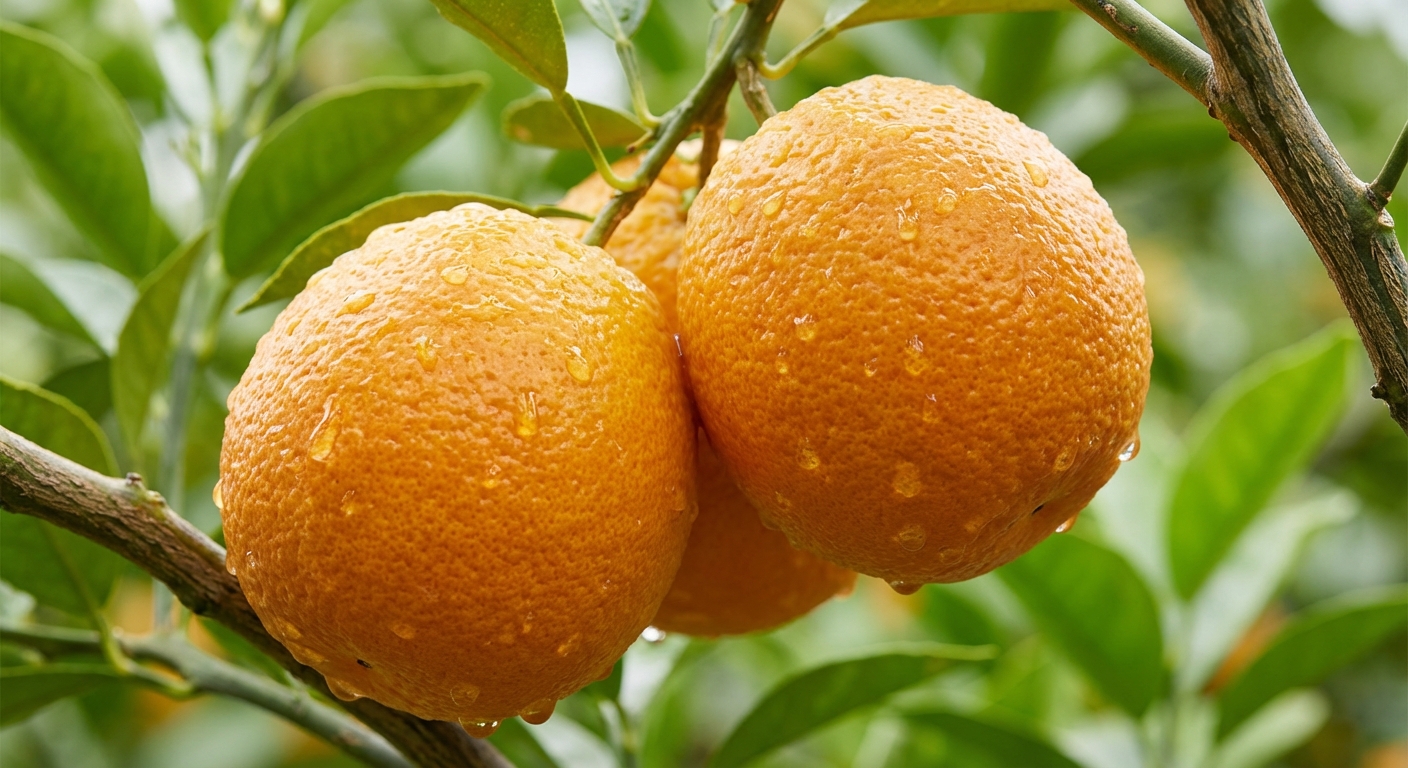
First, there's that signature fragrance. When you peel a Pineapple orange, the oils in the rind release that subtle tropical aroma that gave the variety its name. It's not overwhelming, just a gentle hint that something special is about to happen.
The fruit itself is medium-sized, typically spherical to slightly obovate. The rind develops excellent color, making it one of the most attractive oranges in Florida. The surface has fine pitting and slight pebbling that gives it character.
Inside, you'll find light orange flesh that's tender and incredibly juicy. The flavor is rich and sweet with complex citrus notes that develop as you chew. Unlike some sweet oranges that can taste flat or one-dimensional, Pineapple oranges offer layers of flavor that keep your taste buds engaged.
The fruit does contain moderate seeds, which some people see as a drawback. But here's the thing: those seeds indicate a fully developed, naturally pollinated fruit with complete flavor development. Seedless varieties often sacrifice some taste complexity.
For culinary uses, Pineapple oranges excel both fresh and processed. The rich flavor holds up beautifully in juice, and the aromatic oils make excellent zest for cooking and baking.
How Do You Grow Pineapple Orange Trees Successfully?
Growing Pineapple Orange Trees successfully comes down to understanding what these Florida natives really need. After growing over 250,000 citrus trees at our South Texas nursery, we've learned that success isn't about complicated techniques. It's about getting the fundamentals right.
The key is US Citrus Nursery's Three Plant Pillars: mineral-based soil, live microbials, and complete organic nutrition. When all three work together, your Pineapple Orange Tree becomes nearly bulletproof.
Climate-wise, Pineapple oranges thrive in USDA zones 9-11. They need warm temperatures for proper fruit development but are more frost-sensitive than some other sweet orange varieties. If temperatures drop below 28°F, you'll need protection.
For container growing (which we recommend for most home growers), choose a pot at least 20-25 gallons for mature trees. Drainage is critical. These trees cannot tolerate waterlogged roots.
Here's where most people go wrong: they use potting mix. That pine bark sawdust suffocates roots as it decomposes. Instead, use mineral-based soil that provides permanent aeration. Dr. Mani's Magic Super Soil contains sand, perlite, and coco coir plus biochar, volcanic ash, and live microbes. It never needs replacing.
| Growing Factor | Requirement | Why It Matters |
|---|---|---|
| Climate | Zones 9-11, protect below 28°F | Fruit quality and tree survival |
| Sunlight | 6-8 hours direct sun daily | Flower and fruit production |
| Soil | Mineral-based, well-draining | Root oxygen and health |
| Water | Deep, infrequent watering | Strong root development |
| Fertilizer | Organic, complete nutrition | Steady growth without salt damage |
| Container size | 20-25+ gallons for mature trees | Root space and stability |
For nutrition, skip the synthetic fertilizers. Those blue crystals kill the beneficial microbes your tree needs and can burn roots with salt buildup. Instead, use Dr. Mani's Magic Crab, Kelp & Amino Acids (7-4-4). This organic fertilizer provides all 12 essential nutrients in slow-release form that works with your soil biology.
Apply 1 ounce per inch of trunk diameter monthly during the growing season. Skip feeding when temperatures drop below 40°F.
Don't forget the microbes. These invisible workers protect roots, unlock nutrients, and build disease resistance. Apply Dr. Mani's Magic Plant Super Boost monthly at 2 ounces per gallon of water. This provides full-spectrum bacteria and fungi that keep your soil ecosystem healthy.
Why Do Home Growers Choose Pineapple Orange Trees?
Ask any home grower why they chose a Pineapple Orange Tree, and you'll hear stories about authenticity, flavor, and connection to citrus heritage.
First, there's the practical appeal. This variety produces heavily and reliably. You're not gambling on whether you'll get fruit. Pineapple oranges deliver year after year when you meet their basic needs.
The thornless characteristic makes daily interaction with your tree pleasant. No getting scratched when you check for ripe fruit or do light pruning. Kids can safely help with harvest.
But the real draw is the fruit quality. Home growers who've tasted store-bought oranges their whole lives discover what citrus is supposed to taste like. That aromatic complexity, the balance of sweet and tart, the incredible juiciness of tree-ripened fruit.
Many growers also appreciate the historical connection. This isn't some modern hybrid created in a lab. It's a heritage variety that helped build American citrus culture. When you grow a Pineapple Orange Tree, you're preserving genetic diversity and connecting to agricultural history.
The midseason ripening time works perfectly for home use. You get fresh oranges when many other varieties are out of season, extending your homegrown citrus harvest window.
What Are Some Fascinating Facts About Pineapple Oranges?
The Pineapple Orange Tree has accumulated some incredible stories over its 160-year history. Here are the details that make citrus enthusiasts stop and say "I never knew that!"
The name change from "Hickory" to "Pineapple" happened because the fragrance was so distinctive that it needed a name people could relate to. Imagine trying to market "Hickory oranges" today. The tropical association made all the difference.
Two virtually seedless sports have been discovered over the years. The first, called "Seedless Pineapple," was found in 1932 on Merritt Island, Florida, and even received U.S. Plant Patent 477. A second sport called "Plaquemines" was discovered in Louisiana in 1948. These natural mutations show how citrus trees continue evolving.
In Florida, researchers have developed a clone called "Ridge Pineapple" that shows resistance to burrowing nematodes, one of citrus' persistent pest problems. This demonstrates how traditional varieties can be improved while maintaining their essential characteristics.
The variety became so important in Brazil and South Africa that each country developed their own regional selections. South African growers created "Belvedere" (identical to the original), "Gem," and "Letaba" varieties, while Brazilian growers selected for different harvest timing and fruit characteristics.
Despite being called "Pineapple," the fruit tastes nothing like pineapple. The name refers purely to the aromatic oils in the peel, not the flesh flavor. This confusion has persisted for over 140 years.
The 1894-95 freeze that launched this variety's popularity was so severe it destroyed an estimated 90% of Florida's citrus trees. The Pineapple Orange's ability to rebuild groves quickly made it a hero variety of citrus recovery.
Why Does the Pineapple Orange Tree Deserve a Place in Your Backyard?
Here's what it comes down to: the Pineapple Orange Tree offers something you can't buy in any store. Authentic flavor. Historical significance. The satisfaction of growing your own piece of American citrus heritage.
Think about your current relationship with oranges. You buy them at the grocery store, often shipped from thousands of miles away, picked weeks before they're truly ripe. The flavor is okay, but nothing special. You've probably never experienced what a perfectly ripe, tree-fresh orange actually tastes like.
The Pineapple Orange Tree changes that forever. When you grow your own, you control the harvest timing. You pick fruit at peak ripeness when sugars are fully developed and that aromatic complexity is at its height. The difference in flavor will shock you.
Beyond taste, there's the practical value. A single mature tree can produce 200-300 oranges per year. At current grocery prices, that's $150-300 worth of premium fruit annually. The tree pays for itself within 2-3 years and keeps producing for decades.
Container growing makes it accessible regardless of your climate or space limitations. With proper winter protection, you can grow authentic Florida citrus even in cooler regions. And if you need to move, your tree comes with you.
Most importantly, you become part of preserving citrus genetic diversity. Every heritage variety grown by home enthusiasts helps ensure these genetics survive for future generations. When you plant a Pineapple Orange Tree, you're voting for flavor over convenience, quality over quantity.
Ready to experience what oranges are supposed to taste like? Browse our citrus collection and discover varieties that deliver real flavor, not just pretty packaging. Your taste buds will thank you, and your backyard will never be the same.
Frequently Asked Questions
1. What is a Pineapple Orange Tree?
A Pineapple Orange Tree is a historic sweet orange variety that originated in Florida around 1860. It was named for the distinctive pineapple-like fragrance of its fruit rather than its flavor. The variety became Florida's principal midseason orange after the severe 1894–95 freeze and remains valued for its rich flavor, juiciness, and citrus heritage.
2. Why is the Pineapple Orange called a Pineapple Orange?
The Pineapple Orange gets its name from the distinctive tropical fragrance released by its peel, which reminded growers of fresh pineapple. The fruit itself does not taste like pineapple. Instead, it has a rich, sweet orange flavor with complex citrus notes and a highly aromatic rind.
3. Where did the Pineapple Orange originate?
The Pineapple Orange originated in Florida around 1860 as a chance seedling on the property of J.B. Owens near Citra, Florida. P.P. Bishop propagated the variety around 1873 under the name "Hickory." About a decade later, growers renamed it Pineapple because of its distinctive fragrance.
4. When do Pineapple oranges ripen?
Pineapple oranges are a midseason variety, typically ripening during the winter citrus season. Their harvest timing can vary depending on climate and growing conditions, but they are traditionally valued for filling the midseason gap between early and late orange varieties.
5. Are Pineapple Orange trees good for home gardens?
Yes. Pineapple Orange trees can be excellent home-garden citrus trees because they are highly productive, thornless, flavorful, and well suited to warm climates. They can also be grown in large containers, making them an option for gardeners with limited space.
6. Can you grow a Pineapple Orange tree in a container?
Yes, Pineapple Orange trees can be successfully grown in containers. For a mature tree, use a container of at least 20–25 gallons with excellent drainage. Provide 6–8 hours of direct sunlight each day and protect the tree from temperatures below approximately 28°F.
7. How cold hardy is a Pineapple Orange tree?
Pineapple Orange trees are more sensitive to frost than some other sweet orange varieties. They generally perform best in USDA Zones 9–11 and should be protected when temperatures approach or fall below 28°F. Container-grown trees can be moved to a protected location during freezing weather.
8. What does a Pineapple Orange taste like?
Pineapple oranges have rich, sweet, juicy flesh with complex citrus flavors and a distinctive tropical aroma. The fruit is medium-sized and well colored, with tender flesh suitable for fresh eating, juicing, cooking, baking, and zesting. The fruit contains a moderate number of seeds.
9. How do you care for a Pineapple Orange tree?
To grow a healthy Pineapple Orange tree, provide full sun, excellent drainage, consistent moisture, and complete nutrition. Container trees should be grown in a well-draining growing medium and watered deeply when the soil begins to dry. Regular organic fertilization during active growth can support flowering, fruit development, and overall tree health.
10. Why should you grow a Pineapple Orange tree?
A Pineapple Orange tree is an excellent choice for gardeners who want historic Florida citrus, highly aromatic fruit, reliable production, and exceptional flavor. Its thornless growth habit, container adaptability, and midseason harvest make it especially attractive for backyard citrus growers who want both ornamental value and abundant homegrown fruit.
About the Author
Ron Skaria, MD
Ron Skaria is the son of Dr. Mani. He trained as a medical doctor at Baylor College of Medicine, did his residency at UT Health Science Center - San Antonio and fellowship training at Texas Tech University. He now works full time on the family farm at US Citrus and US Citrus Nursery in Hargill, Texas, building Dr. Mani's Magic alongside his dad. He wrote the Brown Thumb Field Guide to put his father's 48 years of plant science into plain words any gardener can use. His belief is simple. You never had a brown thumb. You just never had the right help.


