


Pink Variegated Lemon Tree: Stunning Pink-Fleshed California Citrus
Picture walking through your garden and spotting something that stops you dead in your tracks. A lemon tree with leaves striped in cream and green. Young fruit painted with pink and yellow brushstrokes. This isn't your imagination. This is the Pink Variegated Lemon Tree, one of nature's most stunning accidents turned into California's prized citrus treasure.
Most people think all lemons look the same. Yellow fruit, green leaves, done. But the Pink Variegated Lemon breaks every rule. Its young fruit displays gorgeous pink and yellow stripes that fade to reveal creamy yellow mature lemons with the same tangy bite you crave. The leaves stay beautifully variegated year-round, making this tree a living piece of art in your garden.
After growing over 250,000 citrus trees at our South Texas nursery, we can tell you this: the Pink Variegated Lemon isn't just pretty. It's practical. It produces abundant fruit throughout the year, thrives in containers, and gives you that authentic Eureka lemon flavor with a visual wow factor that makes neighbors stop and stare.

Organic Fertilizer | Crab, Kelp & Amino Acids (7‑4‑4) | Long-Lasting, Burn-Free Boost | Slow-Release Power for Steady Plant Growth
Key Takeaways
- The Pink Variegated Lemon is a natural mutation of the famous Eureka lemon, discovered in Corona, California in 1911
- Young fruit displays stunning pink and yellow variegation that fades as the lemon matures to creamy yellow
- Leaves remain beautifully variegated with cream and green stripes throughout the tree's life
- Produces authentic Eureka lemon flavor with high acidity, perfect for cooking and beverages
- Virtually thornless and everbearing, producing fruit year-round with peak seasons in late winter through early summer
- Excellent container tree that thrives with proper mineral-based soil and organic care
- More ornamental than standard Eureka lemons while maintaining the same culinary value
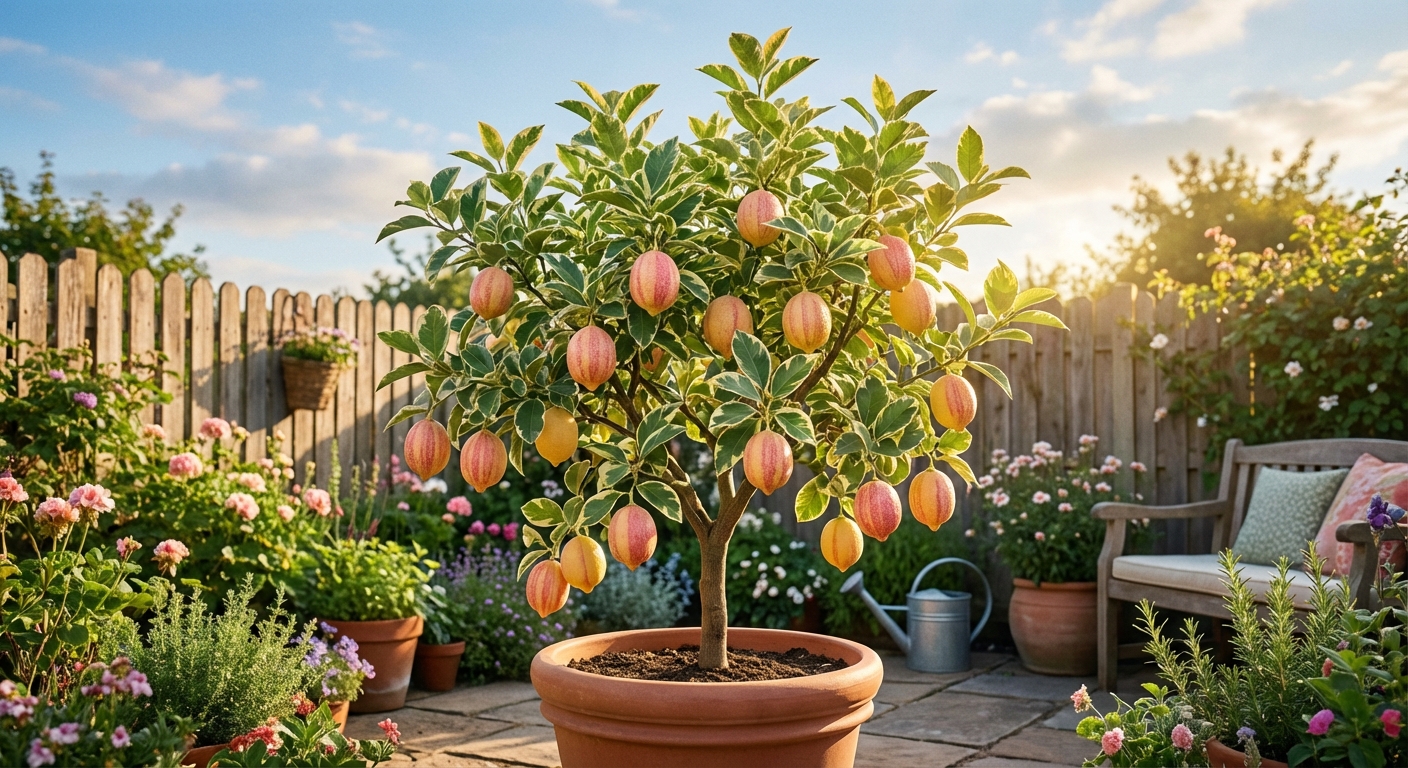
What Makes the Pink Variegated Lemon Tree So Special?
The Pink Variegated Lemon Tree represents one of citrus history's most beautiful accidents. Unlike hybrid varieties created through crossbreeding, this stunning tree emerged as a natural bud mutation. That means somewhere in a California grove over a century ago, a single branch on an ordinary Eureka lemon tree decided to paint itself with pink and cream stripes.
What makes this tree truly special isn't just its looks. The variegation affects every part of the plant. The leaves display permanent cream and green stripes. Young fruit shows pink and yellow patterns. Even the stems can show variegated coloring. You're getting a living art piece that also happens to produce delicious lemons.
But here's the thing most people don't understand: the Pink Variegated Lemon isn't just about beauty. It delivers the same high-acid, intensely flavored fruit as the famous Eureka lemon. The pink coloring in young fruit comes from anthocyanins, the same compounds that give berries their color. As the fruit matures, these fade to reveal the classic lemon yellow we all recognize.
Where Did This Remarkable Tree Come From?
The story begins in 1911 in Corona, California, at the Chase Eureka grove. A citrus researcher named A.D. Shamel was walking through the rows when something caught his eye. One branch on an otherwise normal Eureka lemon tree was producing fruit and leaves unlike anything he'd seen. The leaves were striped with cream and green. The young fruit showed pink and yellow patterns.
Shamel recognized this as a valuable bud mutation. He carefully collected budwood from this special branch and began propagating it. By 1914, budwood from this original mutant branch reached the UCR Citrus Variety Collection, where it was catalogued and preserved for future generations.
This discovery wasn't just scientific curiosity. The Eureka lemon itself had already proven to be one of California's most valuable citrus varieties. Adding ornamental beauty to its proven performance created something truly special. The Pink Variegated Lemon quickly gained attention from both commercial growers and home gardeners who wanted something unique.
The parent Eureka lemon has its own fascinating California story. It originated from Italian seeds planted in Los Angeles around 1858. By 1877, nurseryman Thomas A. Garey was propagating what became known as "Garey's Eureka." The variety's thornless nature, year-round fruiting, and excellent flavor made it California's premier lemon. The Pink Variegated mutation inherited all these traits while adding stunning visual appeal.
How Did This Tree Reach American Gardens?
The Pink Variegated Lemon's journey from scientific curiosity to backyard treasure took decades. Initially, it was primarily maintained in research collections and specialty nurseries. The University of California system played a crucial role in preserving and studying this unique variety.
California's citrus boom in the early 1900s created perfect conditions for specialty varieties like the Pink Variegated Lemon to find their niche. As suburban development expanded and homeowners wanted ornamental fruit trees, the Pink Variegated Lemon offered the perfect combination of beauty and function.
The tree's journey east came with the rise of container growing and improved shipping methods. What once required California's perfect climate could now thrive in containers from Texas to Florida to indoor growing operations nationwide. Today, home gardeners across America can enjoy this California original in their own backyards.
What Cultural Significance Does This Tree Hold?
While the Pink Variegated Lemon doesn't have ancient cultural traditions like some citrus varieties, it has created its own modern legacy. In California, it represents the state's innovative spirit in agriculture. The ability to spot a valuable mutation, preserve it, and share it with the world showcases California's leadership in citrus development.
The tree has become a symbol of how beauty and function can coexist. Many gardeners choose it not just for lemons, but as a conversation piece. The variegated foliage makes it stand out in any landscape, while the promise of fresh lemons adds practical value.
Food enthusiasts and chefs have embraced the Pink Variegated Lemon for its authentic Eureka flavor profile. The high acidity and intense lemon taste make it perfect for everything from lemonade to gourmet cooking. The fact that it looks stunning while producing excellent fruit has made it a favorite among culinary gardeners.
What Are the Botanical Characteristics of This Tree?
The Pink Variegated Lemon Tree shares most characteristics with its parent Eureka lemon, but with striking visual differences that make it unmistakable. Understanding these characteristics helps you know what to expect when you grow this remarkable tree.
| Characteristic | Pink Variegated Lemon | Standard Eureka Lemon |
|---|---|---|
| Tree Size | Medium size, 10-15 feet tall | Medium size, 10-15 feet tall |
| Growth Habit | Spreading and open | Spreading and open |
| Thorns | Virtually thornless | Virtually thornless |
| Leaves | Cream and green variegation | Solid green |
| Young Fruit | Pink and yellow stripes | Solid green |
| Mature Fruit | Creamy yellow, pink fades | Bright yellow |
| Fruiting Pattern | Year-round, everbearing | Year-round, everbearing |
The most striking feature is the permanent leaf variegation. Each leaf displays cream or white stripes alongside the green, creating a beautiful contrast that lasts throughout the tree's life. This isn't seasonal color change. It's genetic variegation that makes the tree ornamental even when not fruiting.
Young fruit displays the famous pink and yellow striping that gives this tree its name. As the lemons mature, the pink pigments fade, leaving creamy yellow fruit that can easily pass for standard Eureka lemons. This color change is completely normal and doesn't affect flavor quality.
The tree maintains the spreading, open growth habit of the parent Eureka variety. This makes it excellent for container growing since it doesn't become too dense or difficult to manage. The virtually thornless nature makes harvesting and pruning much easier compared to thorny citrus varieties.
What Do the Fruit Taste Like and How Are They Used?
Don't let the pretty colors fool you. The Pink Variegated Lemon delivers serious flavor. These lemons pack the same high-acid punch as standard Eureka lemons, making them perfect for any recipe that calls for true lemon taste.
The flesh is fine-grained, tender, and incredibly juicy. When you cut into a mature Pink Variegated Lemon, you'll find 10 segments surrounding a small, usually solid axis. The greenish-yellow flesh color might surprise first-time users, but this is completely normal for Eureka-type lemons.
The flavor profile is intensely acidic with that classic lemon tartness that makes your mouth pucker. This high acidity is exactly what you want for cooking, baking, and beverages. The juice is abundant and the zest is aromatic and flavorful.
Here's how Pink Variegated Lemons excel in the kitchen:
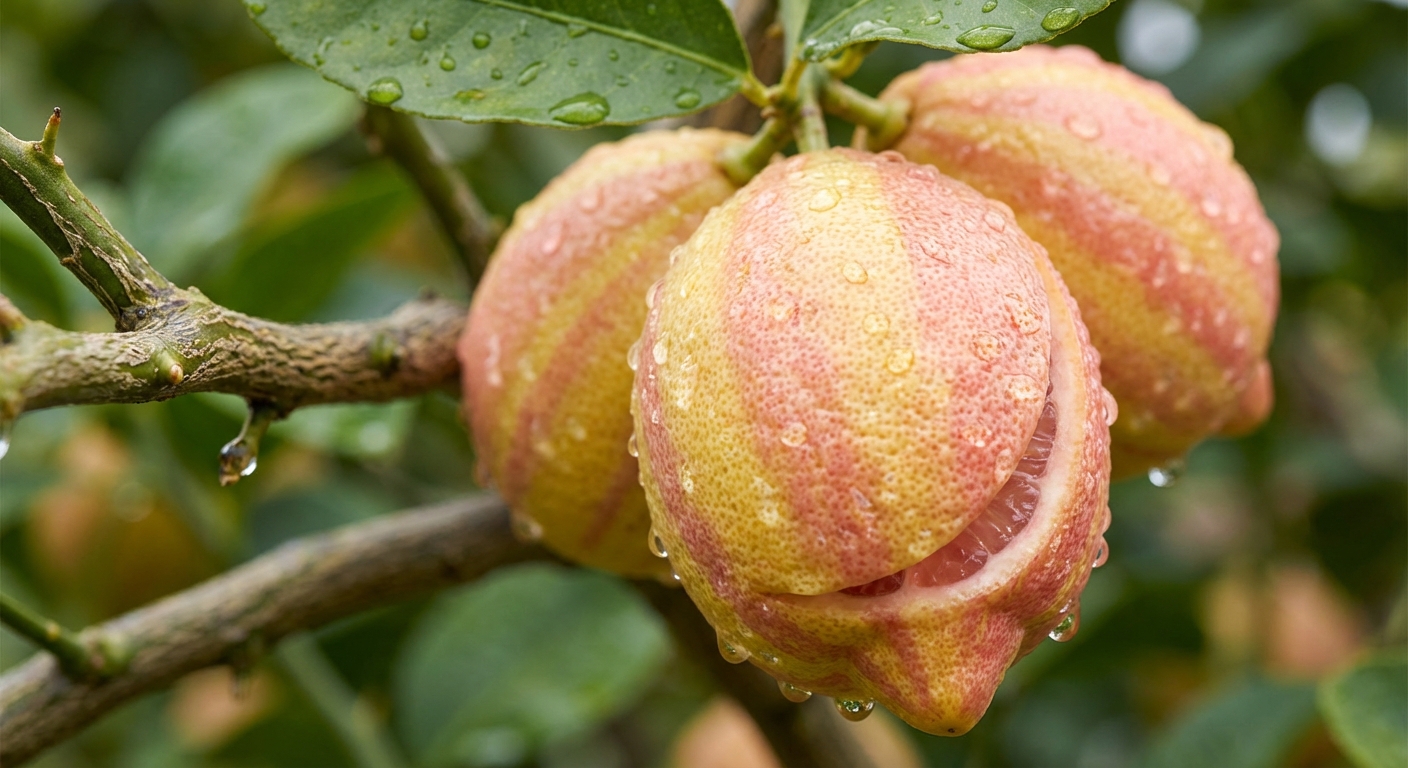
- Fresh Lemonade: The high acid content creates perfectly balanced, tart lemonade
- Cooking and Baking: Excellent for marinades, salad dressings, and baked goods
- Zesting: The aromatic rind adds intense lemon flavor to dishes
- Preserving: High acidity makes these lemons perfect for canning and preserving
- Cocktails: Professional bartenders love the intense flavor for mixed drinks
- International Cuisine: Perfect for Mediterranean, Middle Eastern, and Asian dishes
The seed content varies but is usually minimal. Many Pink Variegated Lemons are nearly seedless, making them convenient for juicing and cooking. When seeds are present, they're typically few and easy to remove.
How Do You Successfully Grow This Tree?
Growing a Pink Variegated Lemon Tree successfully comes down to understanding what your tree's roots really need. After caring for over 250,000 citrus trees at our nursery, we've learned that most growing problems stem from ignoring the fundamentals that keep roots healthy.
The key to success lies in US Citrus Nursery's Three Plant Pillars. When all three pillars are in place, your Pink Variegated Lemon Tree becomes nearly bulletproof. Miss any one, and you'll struggle with yellowing leaves, poor fruiting, and pest problems.
What Climate Does This Tree Prefer?
Pink Variegated Lemon Trees prefer Mediterranean climates with mild winters and warm, dry summers. They're more cold-sensitive than some citrus varieties, suffering damage at temperatures below 28°F. In USDA zones 9-11, they can grow outdoors year-round.
For colder climates, container growing is the perfect solution. You can enjoy this beautiful tree outdoors during warm months and move it to protection when temperatures drop. A sunny, south-facing window or heated greenhouse provides ideal winter conditions.
| Growing Condition | Optimal Range | Container Growing Tips |
|---|---|---|
| Temperature | 60-85°F ideal, protect below 28°F | Move indoors when temps drop below 40°F |
| Sunlight | Full sun (8+ hours daily) | South-facing location, supplement with grow lights if needed |
| Humidity | 40-60% relative humidity | Use humidity trays indoors, ensure good air circulation |
| Air Circulation | Good airflow prevents disease | Avoid cramped indoor spaces, use fans if necessary |
| Protection | Shield from strong winds | Move to sheltered area during storms |
What Soil Does This Tree Need?
Here's where most people get it wrong. Your Pink Variegated Lemon Tree doesn't need "potting mix" from the big box store. That's just pine bark sawdust that suffocates roots as it decomposes. Your tree needs mineral-based soil that never breaks down and provides permanent oxygen to the roots.
This is the first pillar of our Three Plant Pillars system: mineral-based soil. Dr. Mani's Magic Super Soil contains the perfect blend of sand, perlite, and coco coir, plus biochar, volcanic ash, and other amendments that create ideal growing conditions.
The soil pH should be around 6.0 for optimal nutrient uptake. Super Soil comes pre-adjusted to this pH level with sulfur, so you never need to test or adjust pH levels. It provides immediate drainage while retaining just enough moisture for healthy root growth.
How Do You Feed This Tree Properly?
The second pillar is live microbials. Your Pink Variegated Lemon Tree needs beneficial bacteria and fungi to unlock nutrients and protect roots from disease. Dr. Mani's Magic Plant Super Boost provides over 2,000 species of beneficial bacteria and 400-500 species of fungi harvested from natural compost.
Apply 2 ounces per gallon of water monthly to maintain healthy soil biology. These microbes work around the clock, converting organic matter into plant-available nutrients while protecting roots from harmful pathogens.
The third pillar is complete organic fertilizer. Dr. Mani's Magic Crab, Kelp & Amino Acids (7-4-4) provides all 12 essential nutrients your tree needs without the salt damage caused by synthetic fertilizers. Apply 1 ounce per inch of trunk diameter monthly during active growth periods.
How Often Should You Water?
Watering frequency depends on your soil type, temperature, and humidity. With mineral-based Super Soil, overwatering becomes nearly impossible because excess water drains immediately. Water when the top 2 inches of soil feel dry to your finger.
Use the drench method: water thoroughly until water runs from the drainage holes. This ensures deep root hydration without creating soggy conditions that lead to root rot.
Follow this schedule based on conditions:
- Below 60°F or indoors: Once per week
- 60-90°F, humid: Twice weekly
- 60-90°F, dry: Three times weekly
- Above 90°F, humid: Every other day
- Above 90°F, dry: Daily
Why Do Home Growers Fall in Love with This Tree?
Home gardeners choose the Pink Variegated Lemon Tree for reasons that go far beyond just growing fruit. This tree delivers an experience that combines beauty, function, and genuine satisfaction in ways that standard fruit trees simply can't match.
The ornamental value alone justifies growing this tree. The permanently variegated leaves create year-round interest in your garden. Even in winter when the tree isn't actively fruiting, those cream and green striped leaves provide beauty that standard green-leafed trees can't offer.
Then there's the excitement of watching young fruit develop. The pink and yellow striping on immature fruit creates anticipation as you watch the colors gradually fade to reveal mature lemons. It's like unwrapping a present that takes months to fully reveal itself.
The practical benefits make this tree even more appealing. The virtually thornless nature means you can harvest fruit and prune branches without getting scratched. The everbearing habit provides fresh lemons throughout most of the year, with peak production in late winter through early summer.
Container growing makes this tree accessible to gardeners in any climate. You can enjoy fresh lemons and ornamental beauty whether you live in Minnesota or Arizona. The tree's moderate size makes it manageable in containers while still producing meaningful harvests.
What Are Some Fascinating Facts About This Tree?
The Pink Variegated Lemon Tree holds some surprising secrets that even experienced citrus growers might not know. These details add to the tree's mystique and help you appreciate what makes it so special.
The variegation pattern is completely random and never repeats exactly. Each leaf, each fruit, and each branch section displays its own unique pattern of cream and green or pink and yellow. Your tree is literally one-of-a-kind in its exact coloring patterns.
The pink coloring in young fruit comes from the same anthocyanin compounds found in red cabbage and purple grapes. These water-soluble pigments respond to temperature, light, and pH changes, which is why the pink color fades as fruit matures and environmental conditions change.
Despite its ornamental appearance, the Pink Variegated Lemon produces fruit with identical nutritional content to standard Eureka lemons. The vitamin C content, citric acid levels, and mineral content remain unchanged by the genetic mutation that creates the variegation.
The original mother tree from the Chase grove in Corona, California, may still exist. Citrus trees can live for decades or even centuries with proper care, meaning the very branch that started this entire variety could theoretically still be producing variegated fruit today.
Commercial growers rarely plant Pink Variegated Lemon Trees because the variegated leaves contain less chlorophyll than standard green leaves. This reduces photosynthetic efficiency slightly, making the trees less profitable for large-scale production. This commercial disadvantage keeps the variety special for home gardeners.
The variegation trait cannot be reproduced from seed. If you plant seeds from Pink Variegated Lemon fruit, the resulting trees will be standard green Eureka lemons. The variegation only passes through vegetative propagation like grafting or budding.
Why Does This Tree Deserve a Place in Your Garden?
Choosing the right citrus tree for your garden means finding one that delivers both beauty and function while fitting your growing conditions and maintenance preferences. The Pink Variegated Lemon Tree checks every box for gardeners who want something truly special.
This tree gives you authentic California lemon flavor with ornamental beauty that standard fruit trees can't match. The permanent leaf variegation means your tree looks stunning even when not fruiting. When it does produce fruit, the pink-striped young lemons add an extra layer of visual interest.
The practical benefits make this tree even more compelling. Nearly thornless branches make harvesting safe and easy. Year-round fruiting means fresh lemons for cooking and beverages whenever you need them. Excellent container growing characteristics let you enjoy this tree regardless of your climate zone.
Perhaps most importantly, this tree connects you to California citrus history. You're growing a direct descendant of that remarkable mutant branch discovered in Corona over a century ago. Every Pink Variegated Lemon Tree traces back to that single branch, making you part of an exclusive group preserving a genuine piece of agricultural heritage.
The Pink Variegated Lemon Tree isn't just another fruit tree. It's a conversation starter, a genetic treasure, and a source of both beauty and delicious fruit. When you establish it with the right foundation using mineral-based soil, live microbes, and complete organic fertilizer, you're investing in years of enjoyment and abundant harvests.
Ready to add this stunning California original to your garden? Browse our citrus collection and discover why the Pink Variegated Lemon Tree has captured the hearts of gardeners nationwide. With proper care using the Three Plant Pillars system, your tree will thrive and provide beauty and fruit for years to come.
Frequently Asked Questions
1. What is a Pink Variegated Lemon Tree?
A Pink Variegated Lemon Tree is a natural mutation of the Eureka lemon discovered in Corona, California, in 1911. It is known for its cream-and-green variegated leaves and young lemons that develop distinctive pink and yellow stripes before maturing to creamy yellow. The fruit retains the classic, highly acidic Eureka lemon flavor.
2. Are Pink Variegated Lemons naturally pink?
Yes, the young fruit of Pink Variegated Lemon Trees naturally develops pink and yellow coloration. The pink color comes from anthocyanin pigments in the immature fruit. As the lemons mature, the pink coloration gradually fades and the fruit develops a creamy yellow appearance.
3. What do Pink Variegated Lemons taste like?
Pink Variegated Lemons have a strong, tart Eureka lemon flavor with high acidity and abundant juice. Despite their unusual appearance, the mature fruit tastes much like a traditional Eureka lemon, making it excellent for lemonade, baking, cooking, marinades, zesting, cocktails, and preserving.
4. Are Pink Variegated Lemon Trees thornless?
Pink Variegated Lemon Trees are virtually thornless, although young growth may occasionally develop small thorns. Their relatively smooth branches make them easier to prune and harvest than many thornier citrus varieties, which is one reason they are popular with home gardeners.
5. Can Pink Variegated Lemon Trees grow in containers?
Yes, Pink Variegated Lemon Trees grow well in containers and are an excellent choice for patios, decks, and small gardens. Container growing is also useful in colder climates because the tree can be moved indoors or into a protected location when temperatures become dangerous.
6. How much sunlight does a Pink Variegated Lemon Tree need?
A Pink Variegated Lemon Tree performs best with at least 8 hours of direct sunlight per day. Outdoor trees should be placed in a full-sun location with protection from extreme heat when necessary. Indoor container trees should receive strong sunlight through a south-facing window and may need supplemental grow lighting.
7. What temperature is too cold for a Pink Variegated Lemon Tree?
Pink Variegated Lemon Trees are cold-sensitive and can suffer damage when temperatures fall below approximately 28°F. They grow best in USDA Zones 9-11. Gardeners in colder climates can grow them in containers and move the tree indoors or into a protected space before freezing temperatures arrive.
8. How often should you water a Pink Variegated Lemon Tree?
Water a Pink Variegated Lemon Tree when the top 2 inches of soil feel dry, then water deeply until water drains from the container or surrounding soil. During hot, dry weather, the tree may need watering more frequently, while cool or indoor conditions generally require less frequent watering. Good drainage is essential to prevent root problems.
9. Can you grow a Pink Variegated Lemon Tree from seed?
No, growing from seed will not reliably reproduce the Pink Variegated Lemon's variegation. The distinctive leaf and fruit patterns are maintained through vegetative propagation such as grafting or budding. Seed-grown plants may revert to standard green-leafed Eureka-type citrus and won't reliably retain the Pink Variegated characteristics.
10. Why are the leaves on my Pink Variegated Lemon Tree turning green?
Pink Variegated Lemon Trees naturally have cream-and-green leaves, but individual branches can sometimes produce predominantly green growth. Because green leaves contain more chlorophyll, vigorous green shoots can potentially outgrow the slower-growing variegated portions. Removing unwanted fully green shoots can help preserve the tree's characteristic variegated appearance.
About the Author
Ron Skaria, MD
Ron Skaria is the son of Dr. Mani. He trained as a medical doctor at Baylor College of Medicine, did his residency at UT Health Science Center - San Antonio and fellowship training at Texas Tech University. He now works full time on the family farm at US Citrus and US Citrus Nursery in Hargill, Texas, building Dr. Mani's Magic alongside his dad. He wrote the Brown Thumb Field Guide to put his father's 48 years of plant science into plain words any gardener can use. His belief is simple. You never had a brown thumb. You just never had the right help.


